Tejiendo la Morriña
Morriña:
[noun, Galician]
A keen sense of nostalgia and longing for one’s homeland and its territory.
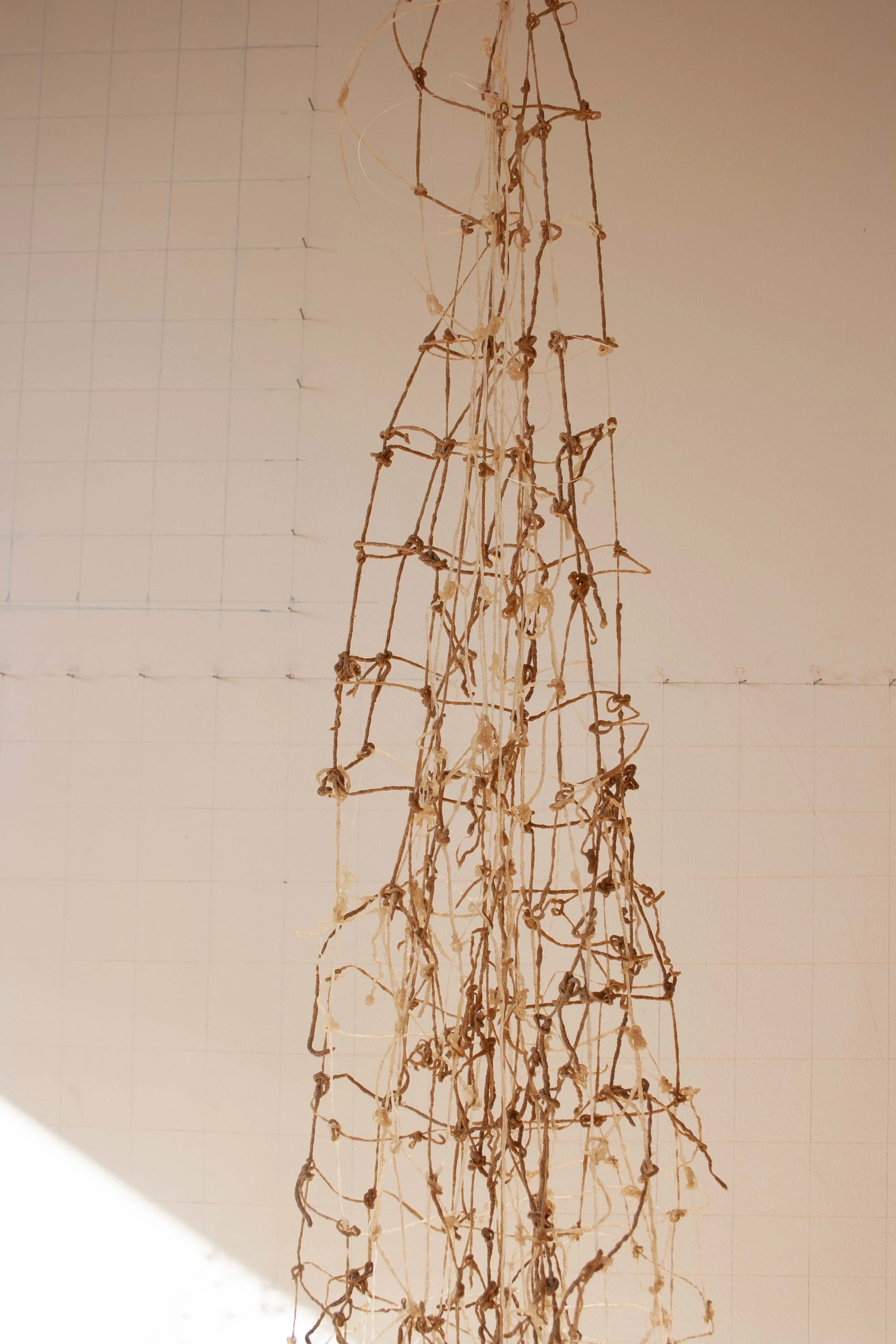
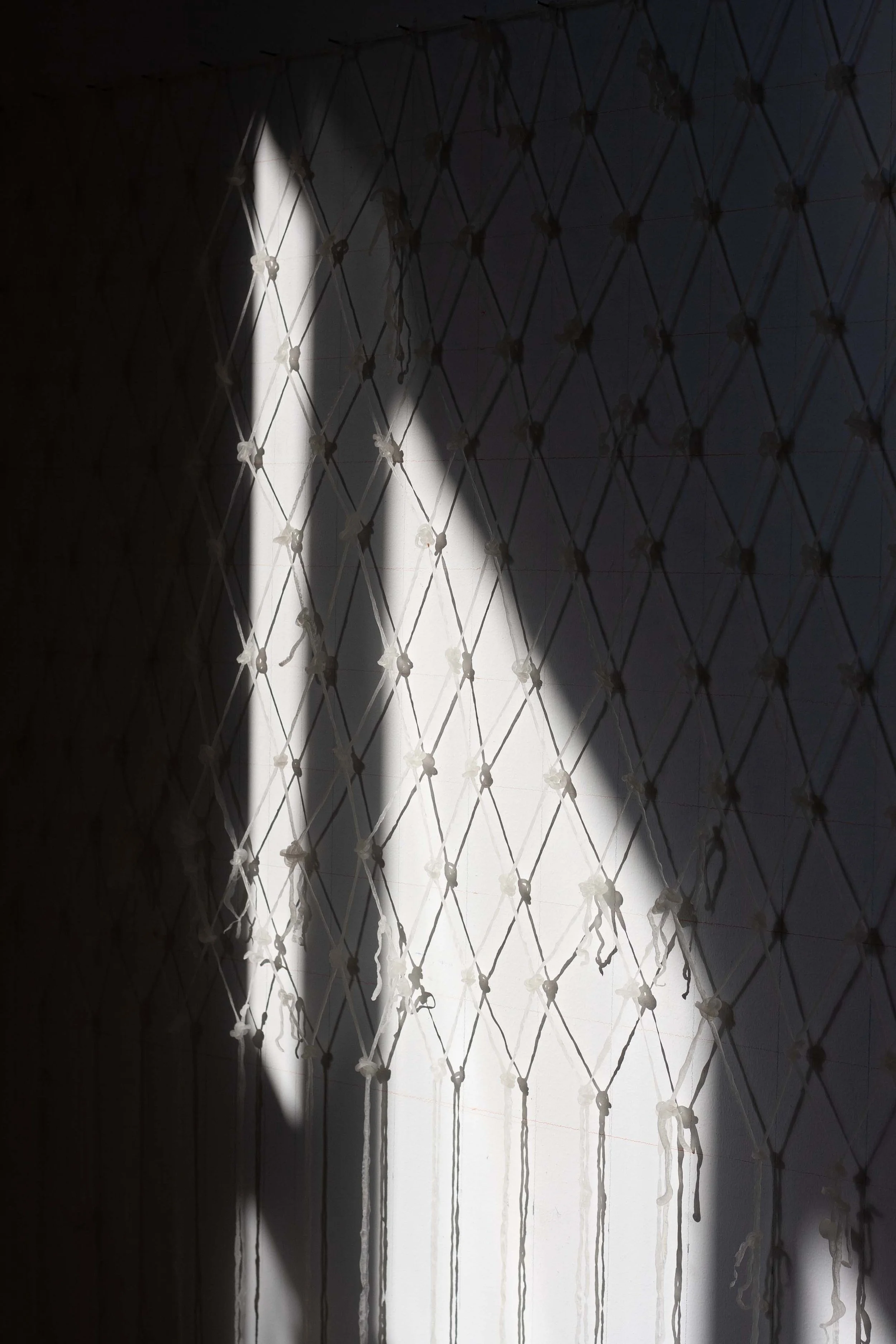
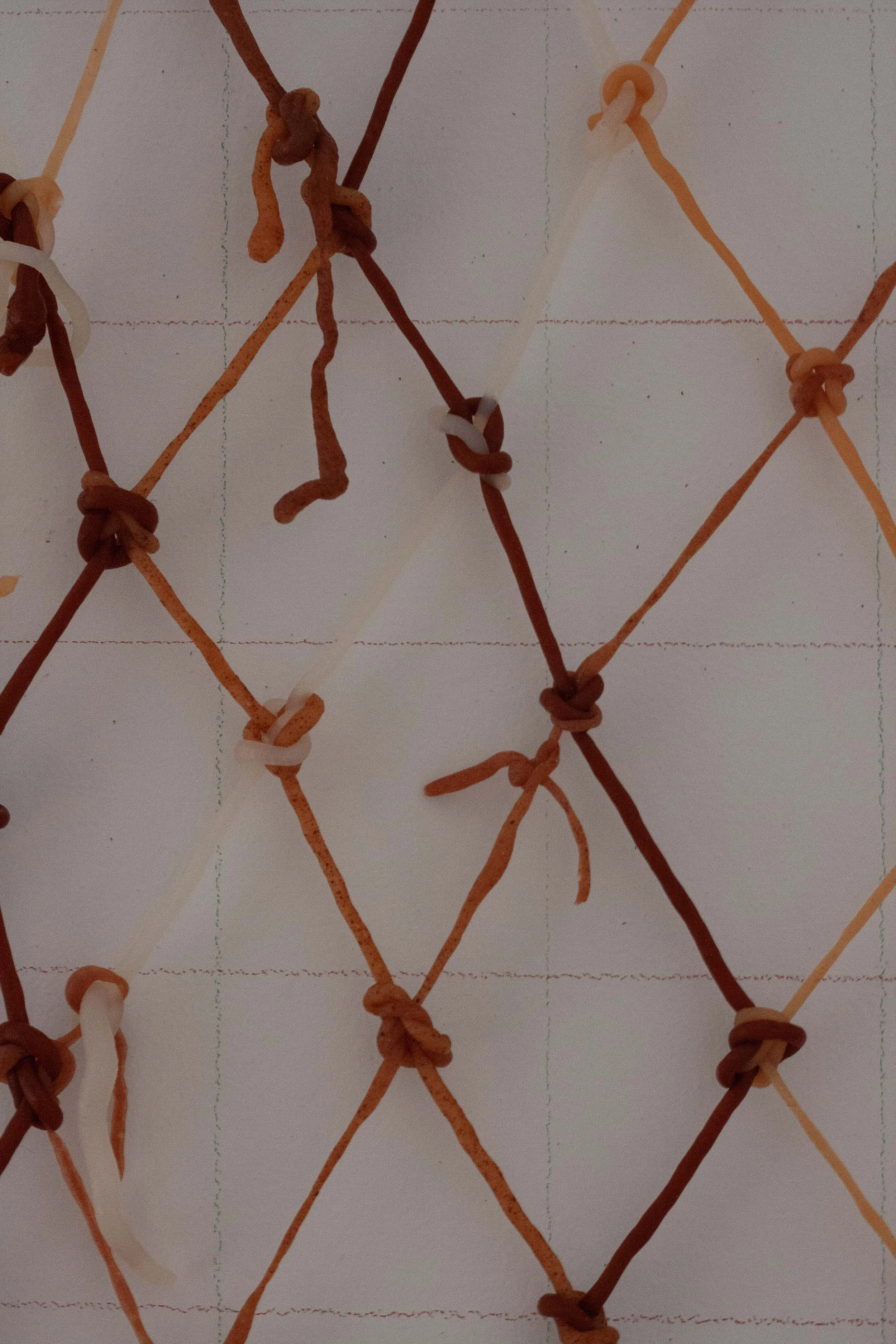
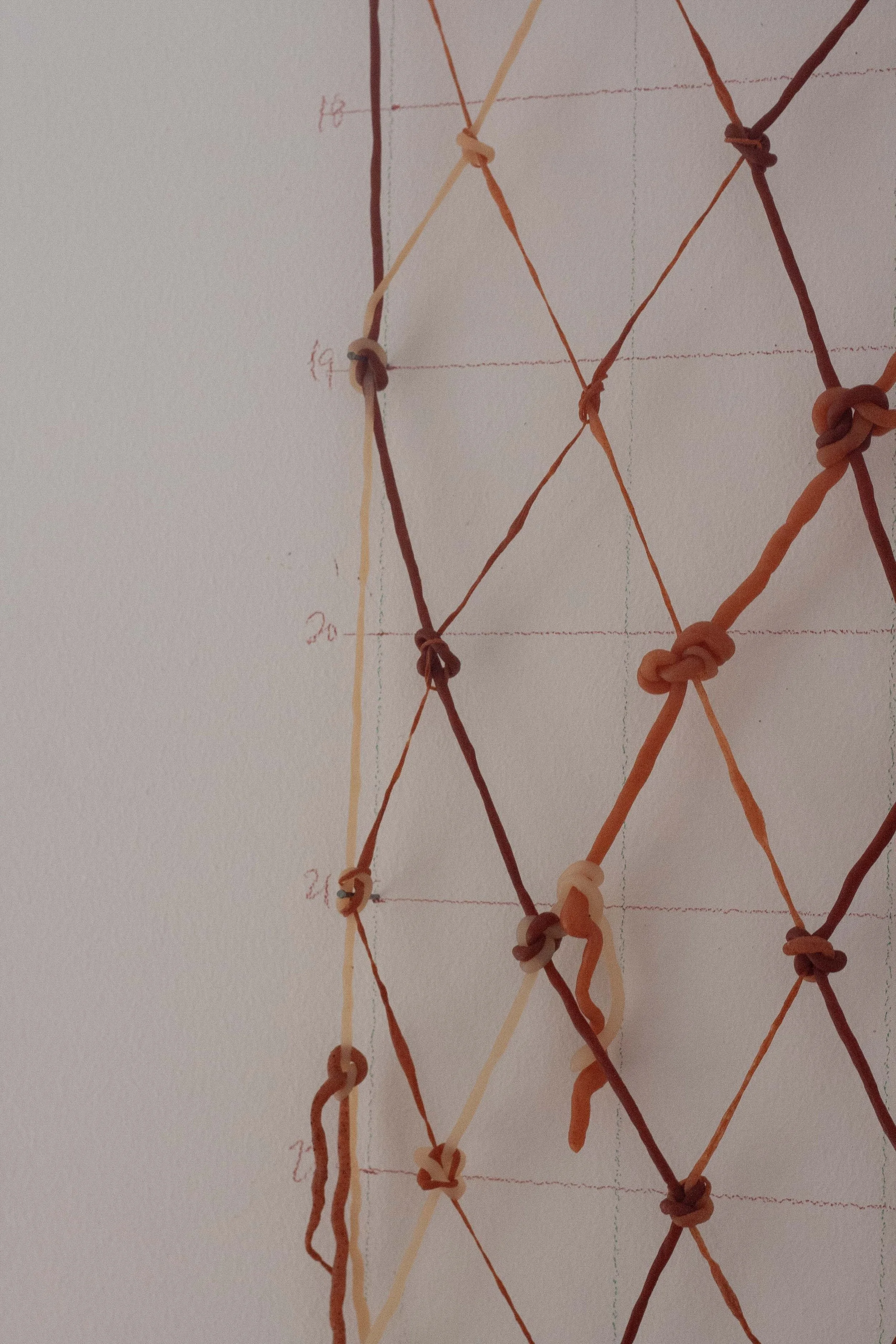
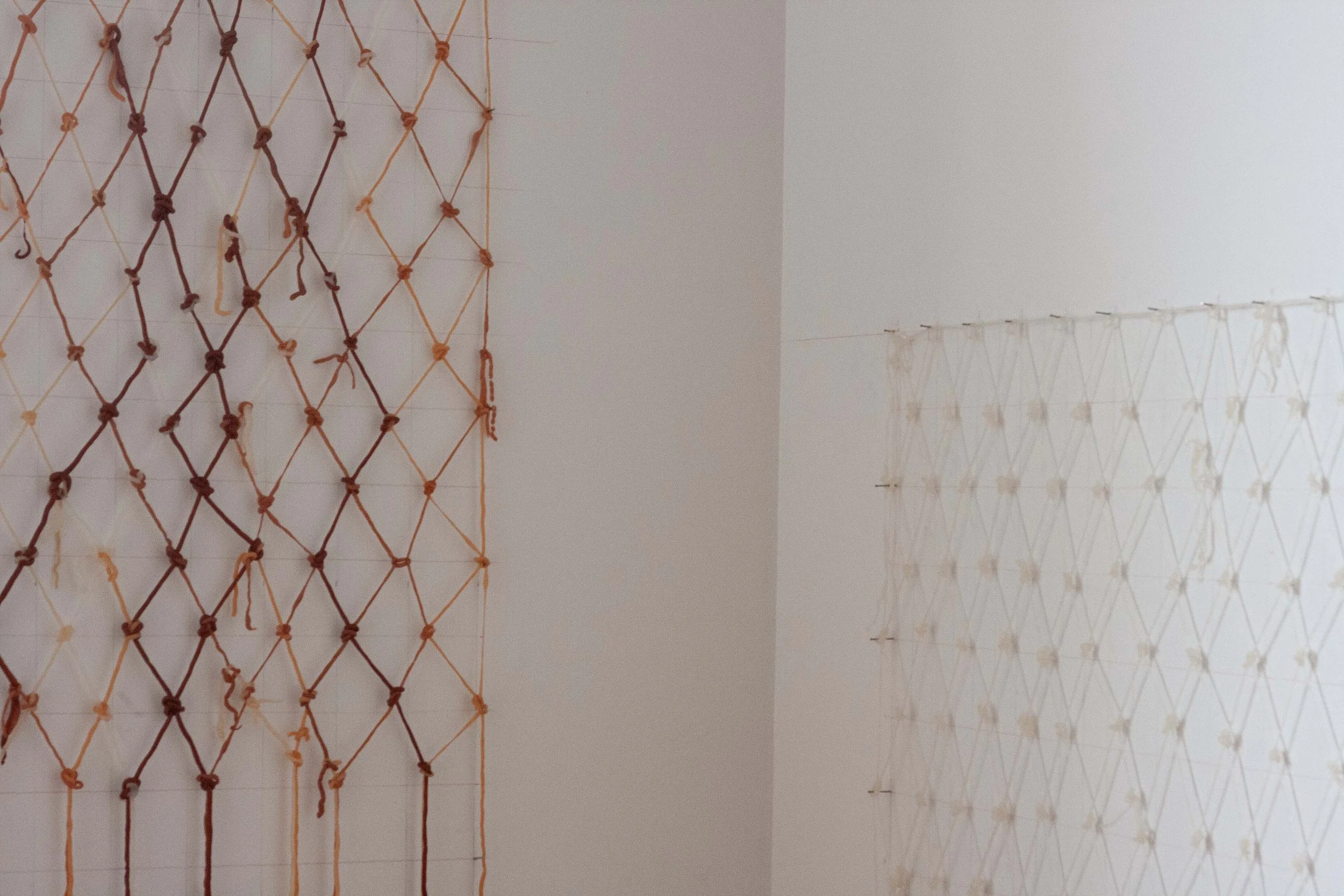
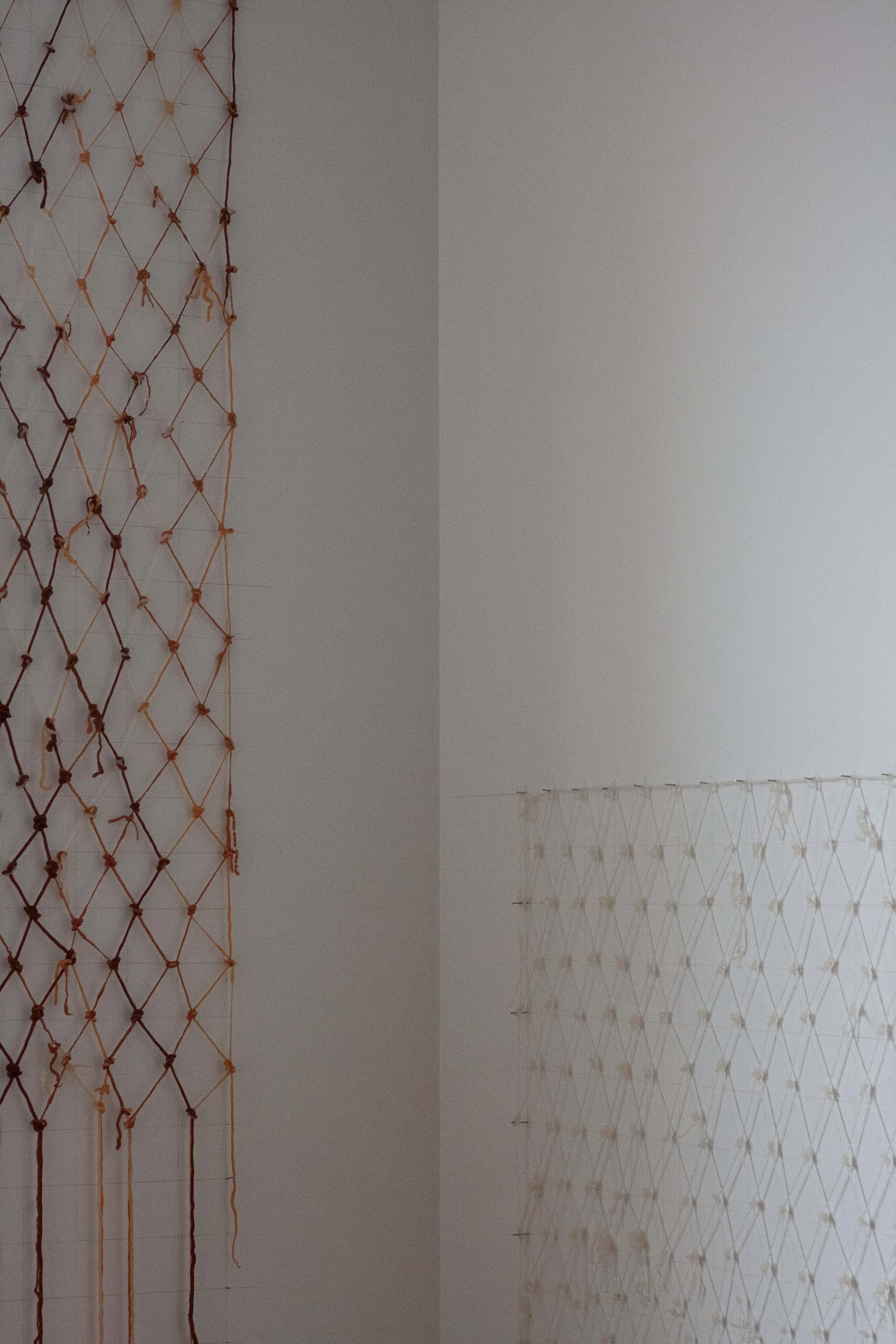
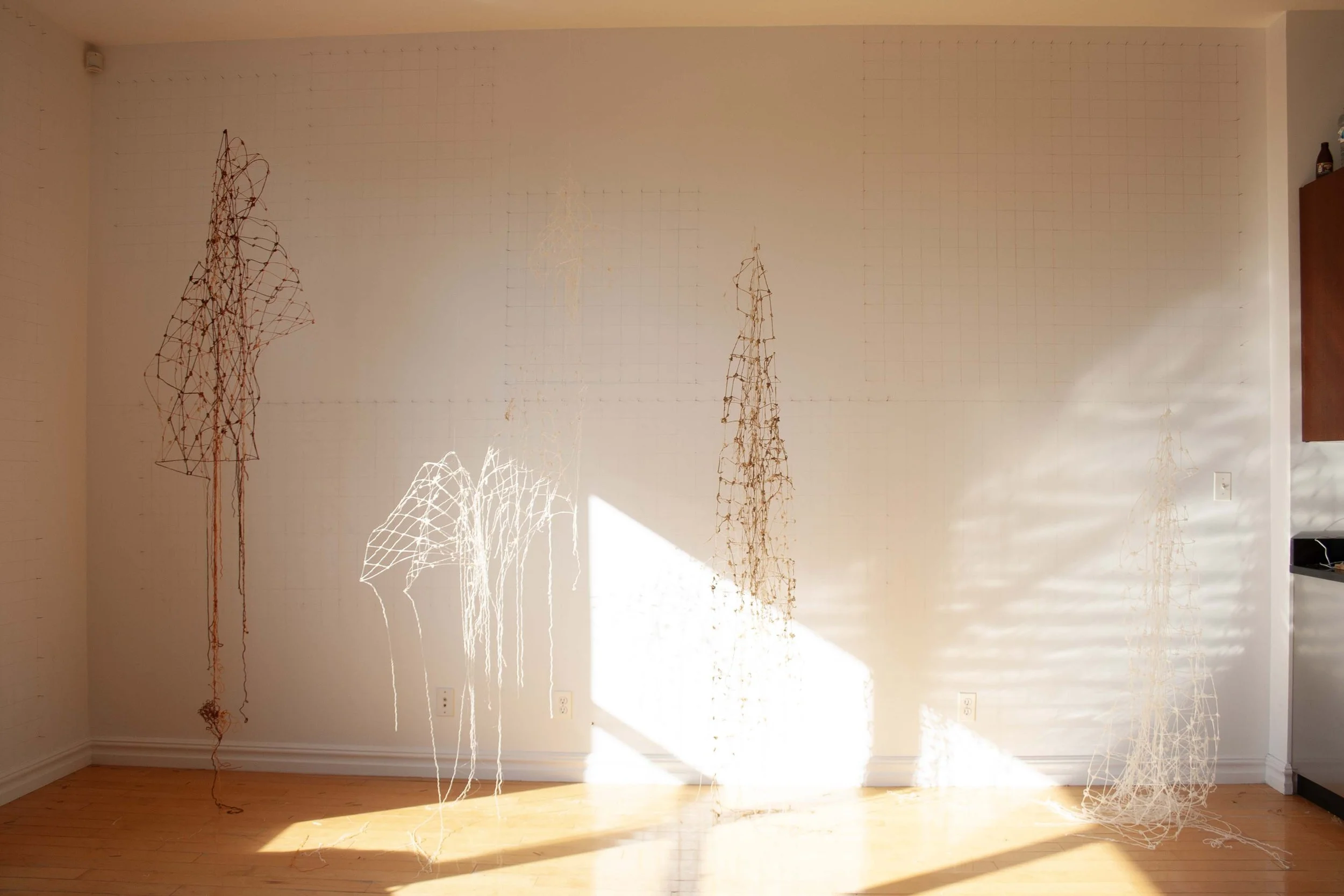
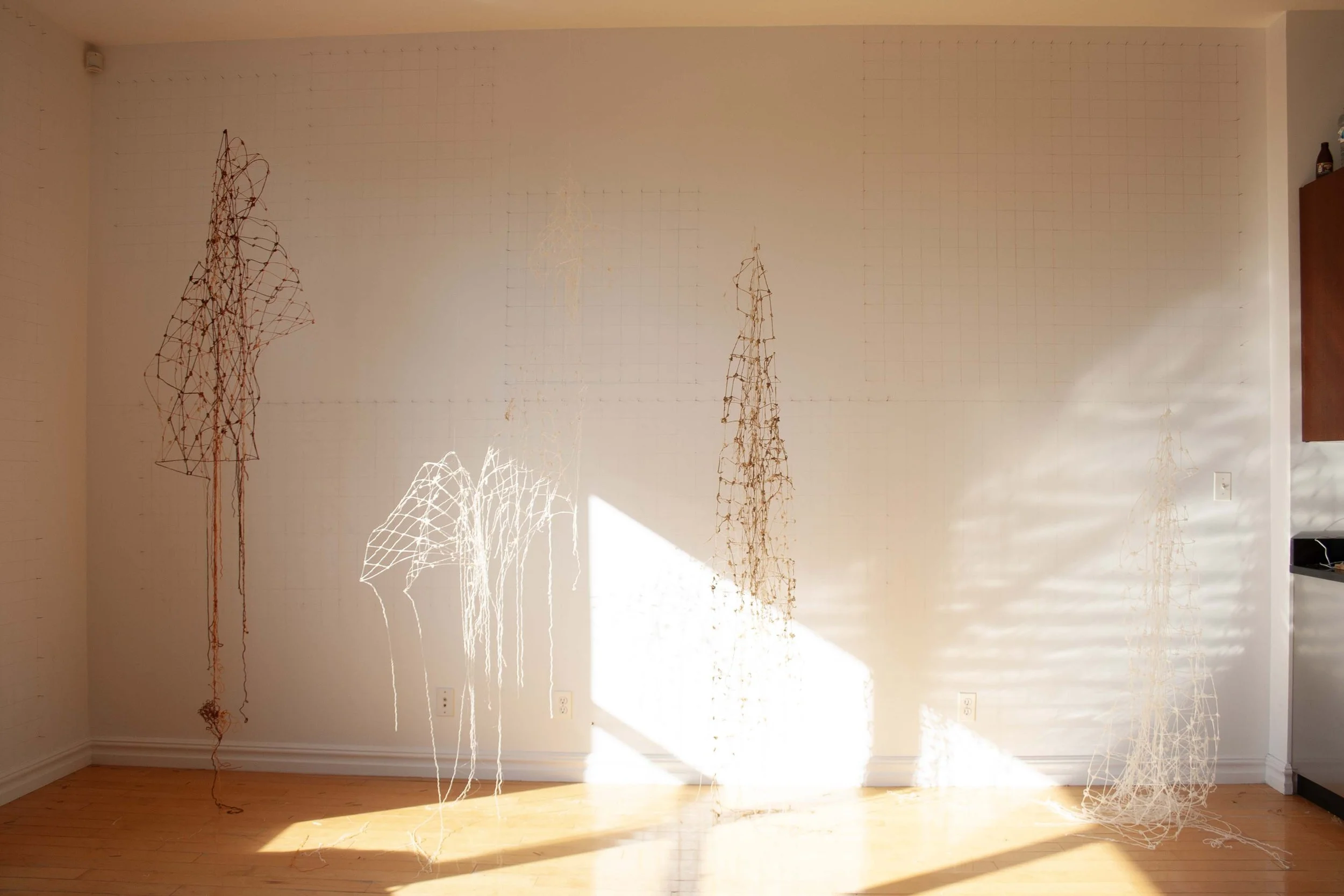
Tejiendo la Morriña is a series of sculptures made from samples of Earth matter of the Venezuelan territory collected by, or gifted to, María Elena Pombo between 2023 and 2024. The sculptures explore Venezuelans connection to their country’s nature and the nostalgia experienced by those who no longer inhabit it.
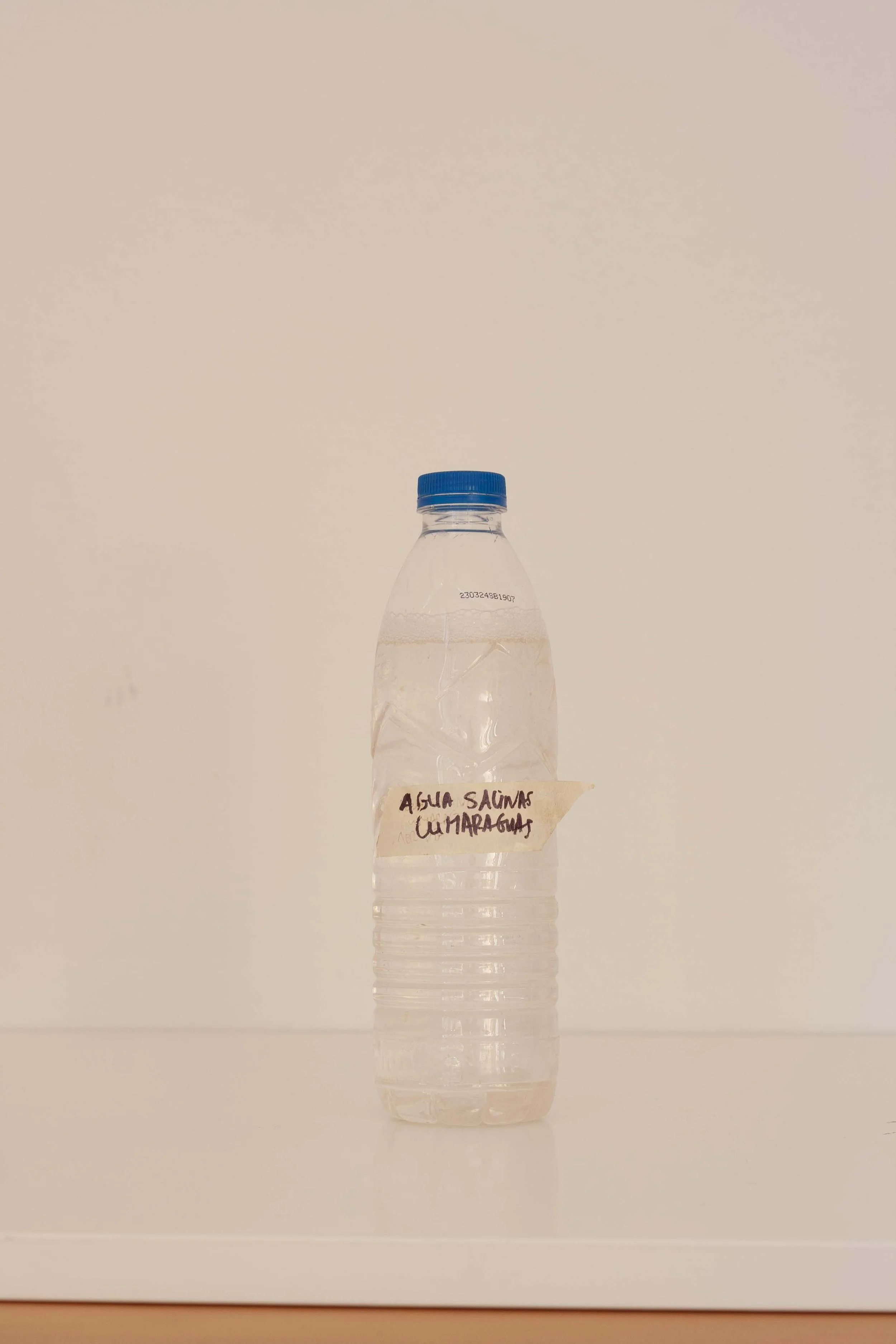
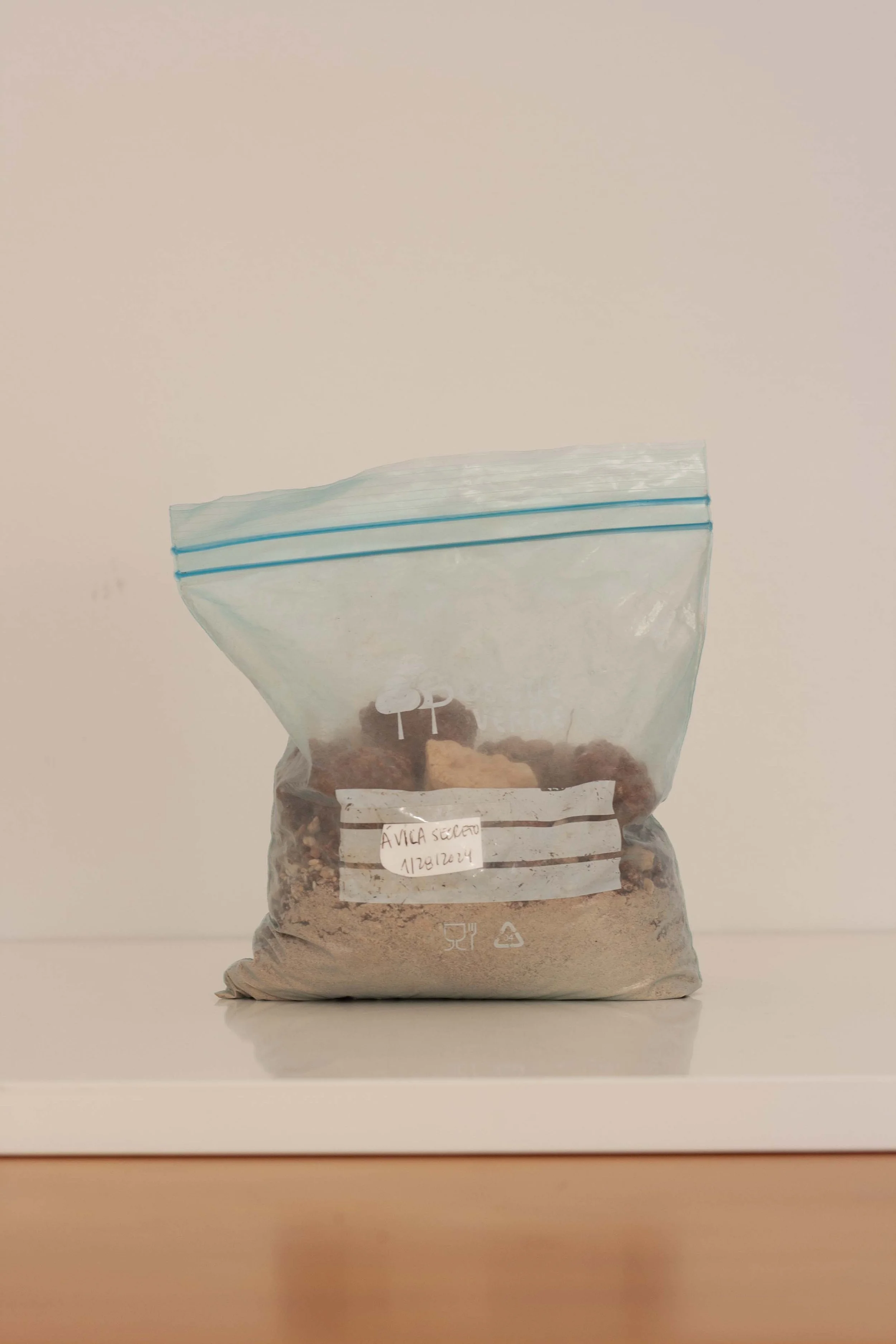
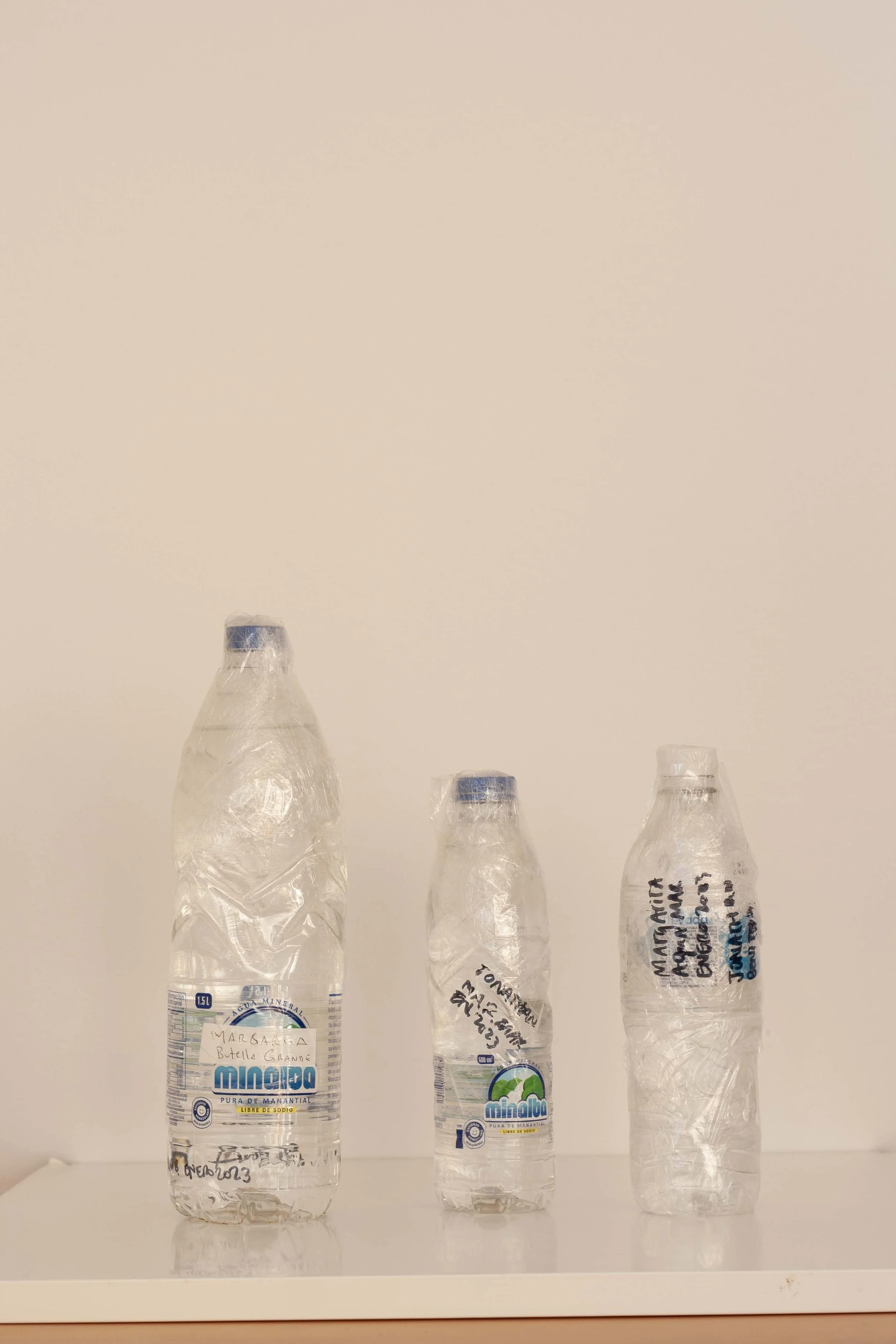
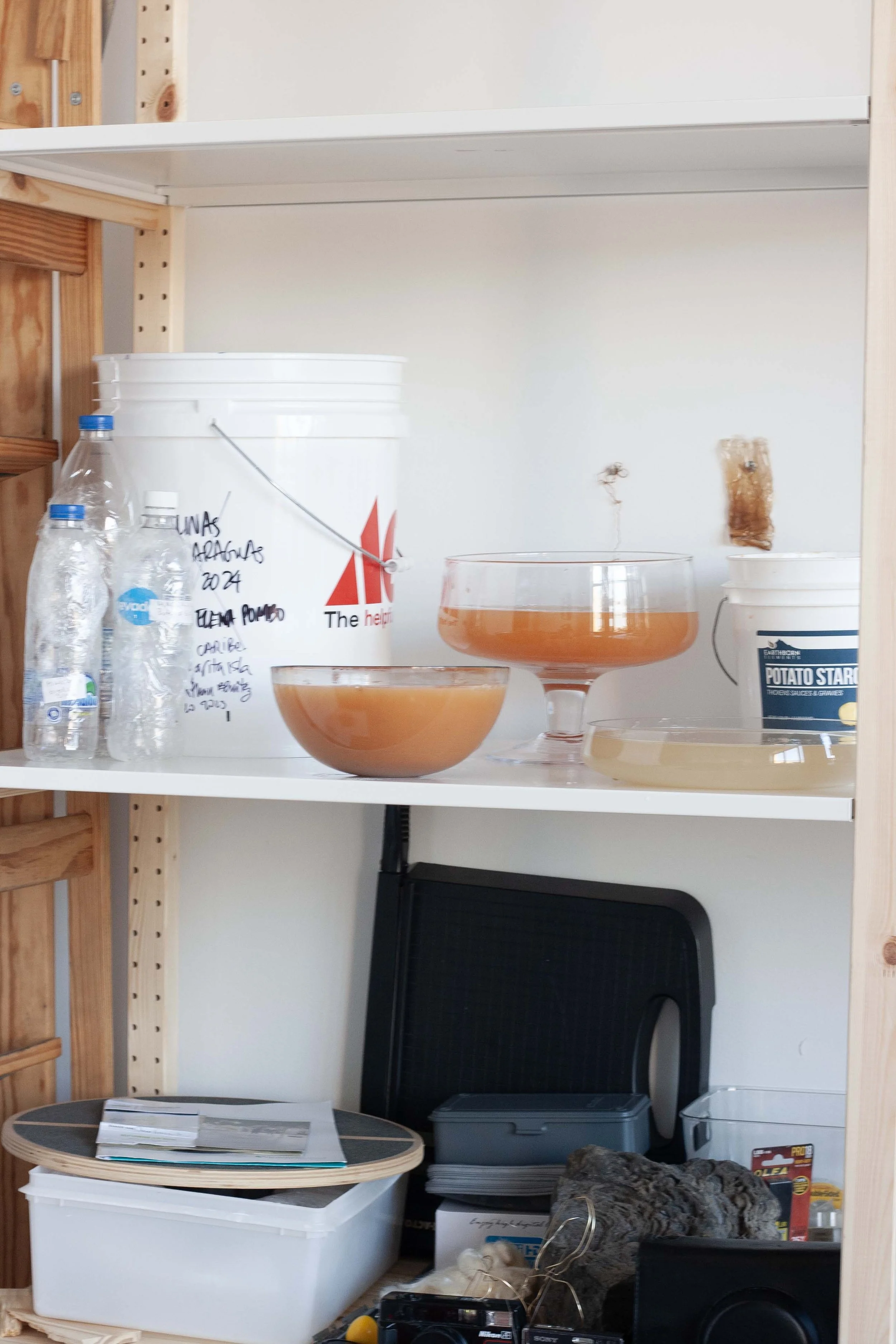
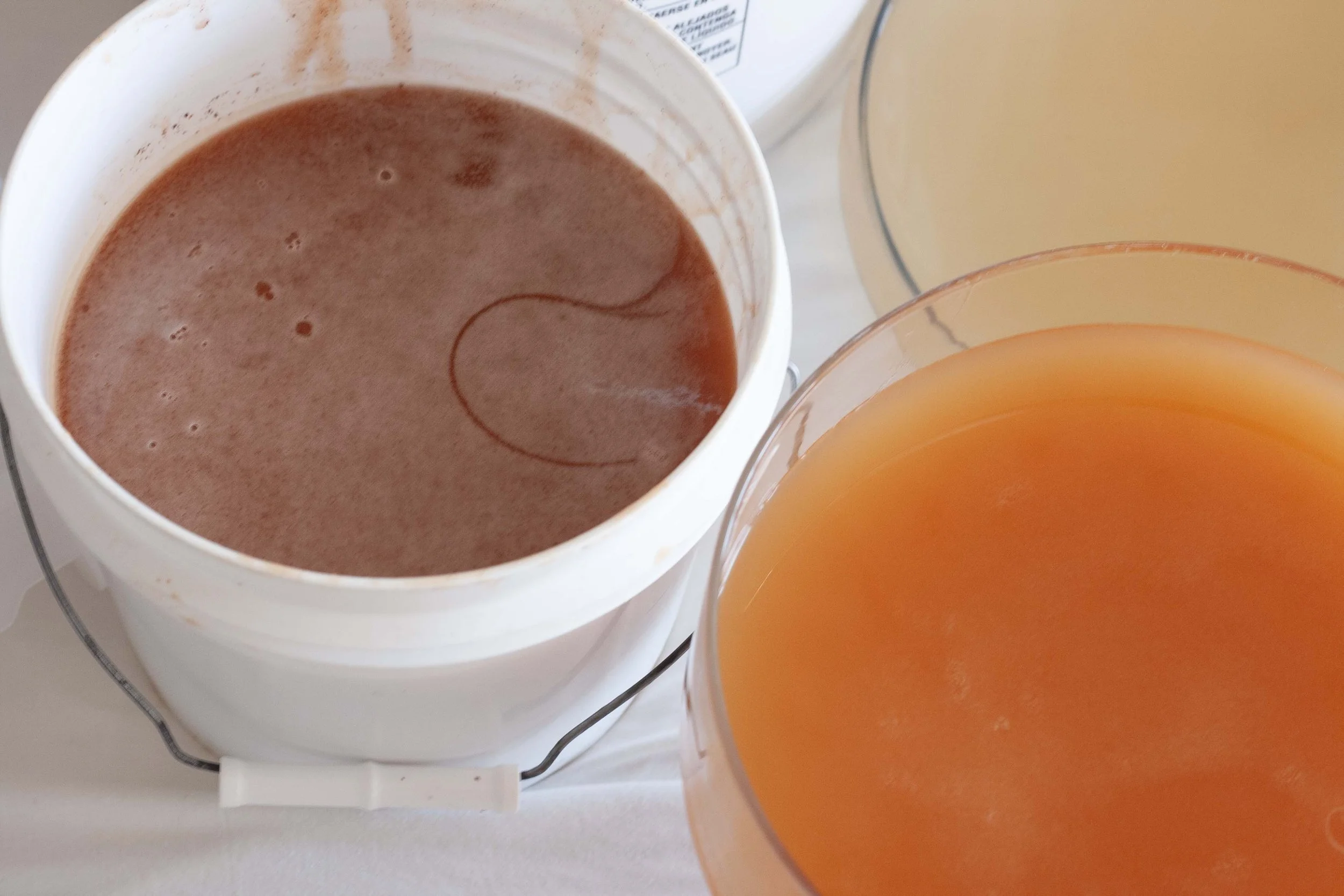
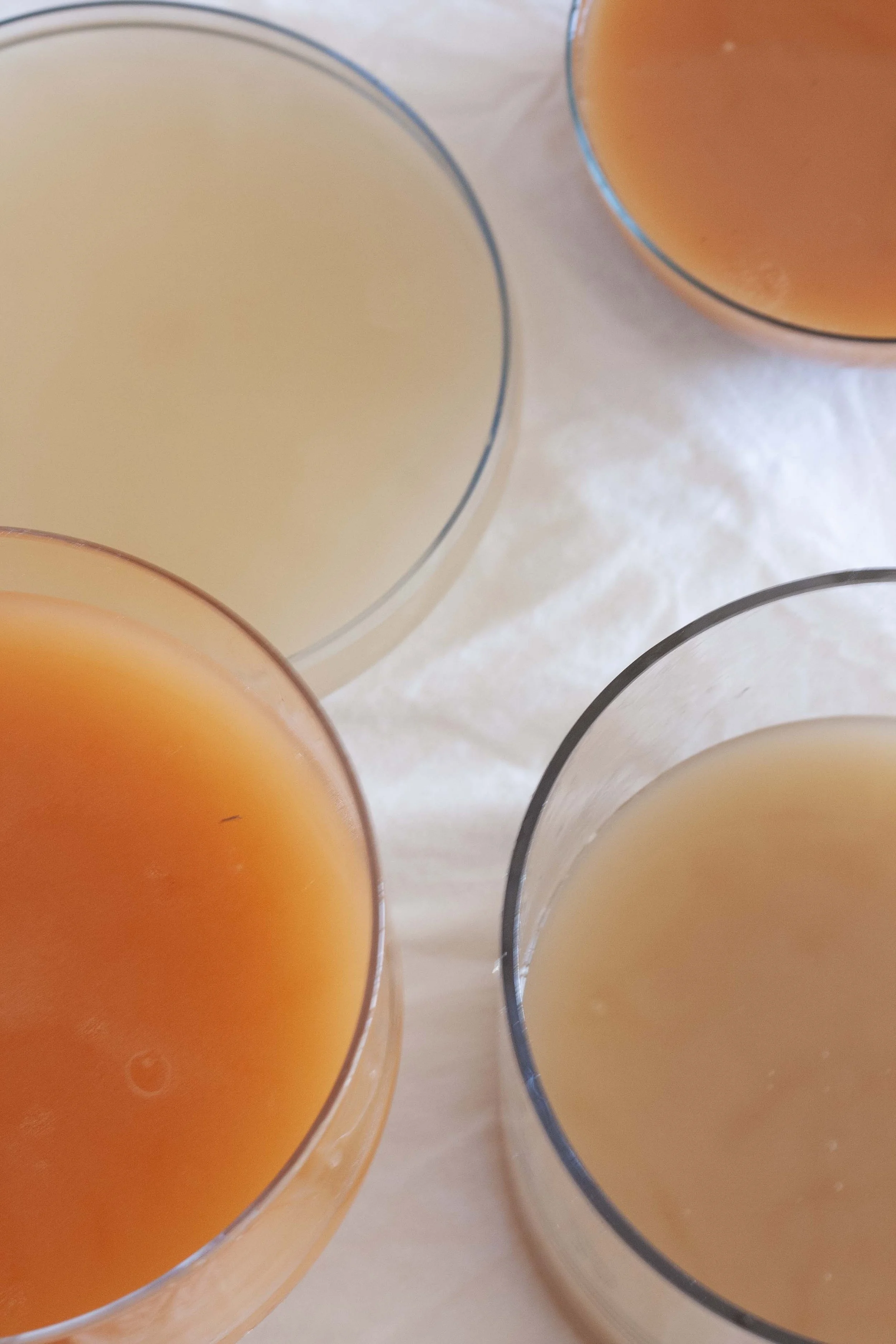
From water from the Caribbean sea, to sand from Los Médanos de Coro, Venezuela’s desert, to salt from Las Cumaraguas, a salt evaporation pond in western Venezuela, and soil from El Ávila, the iconic mountain of Caracas.
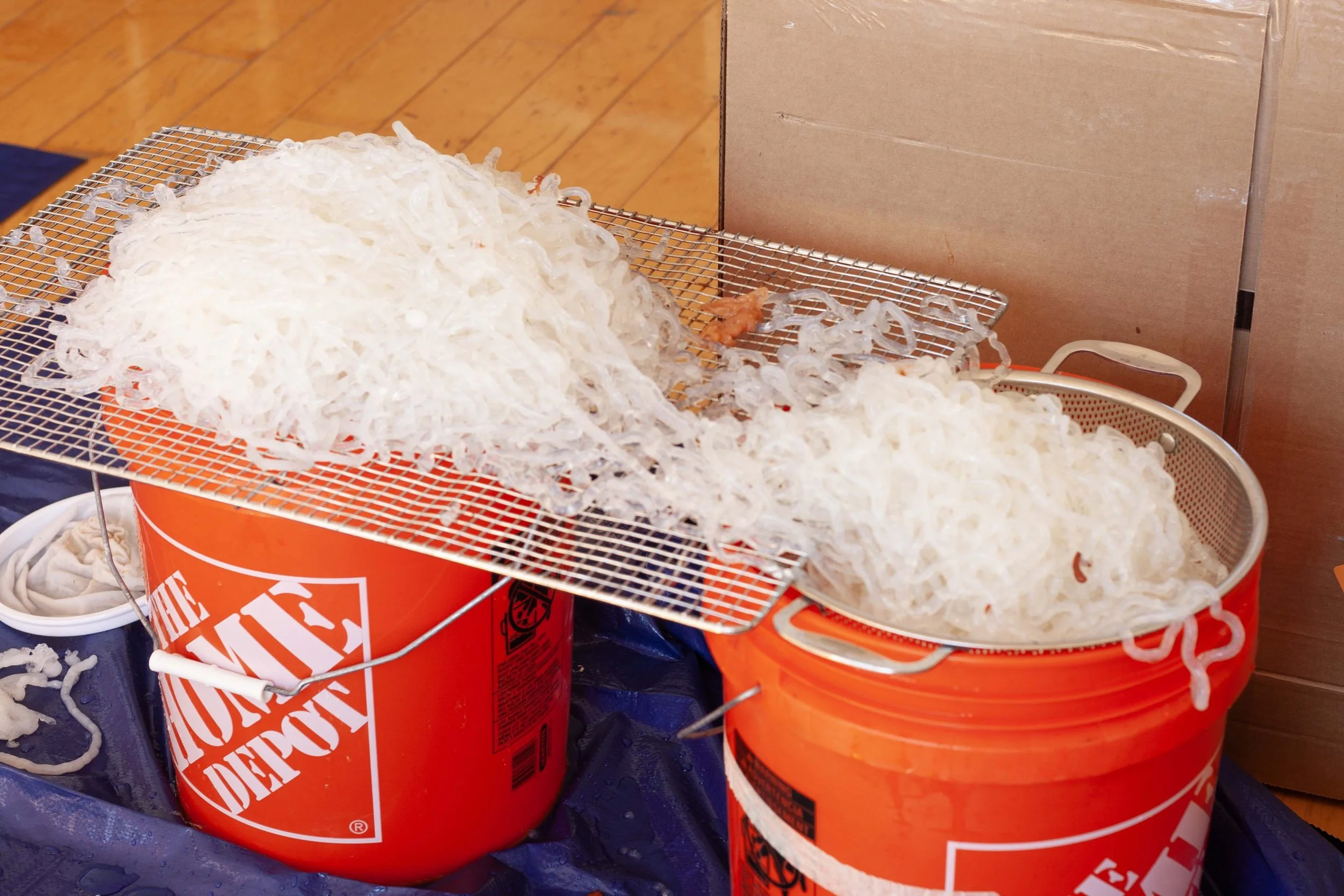
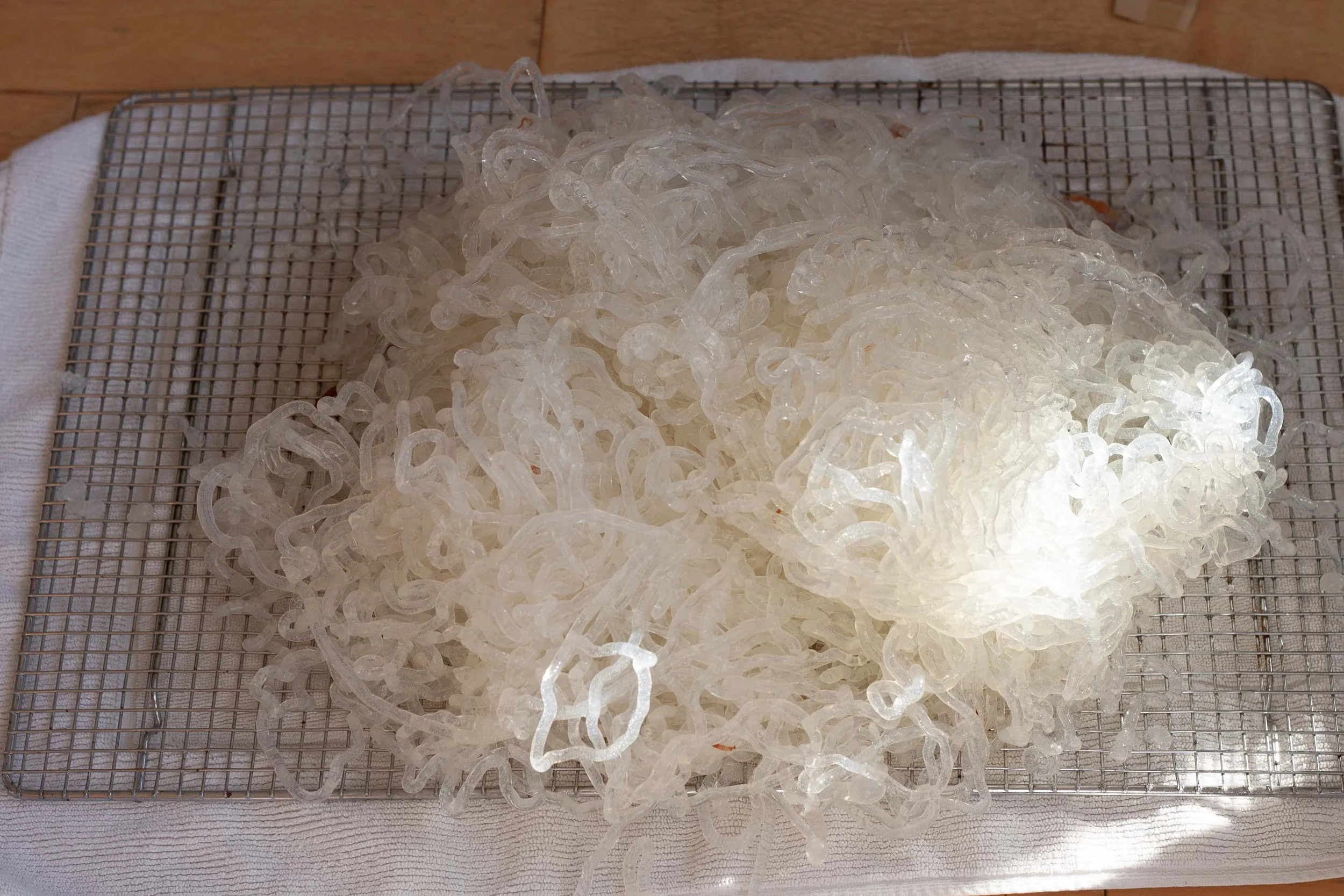
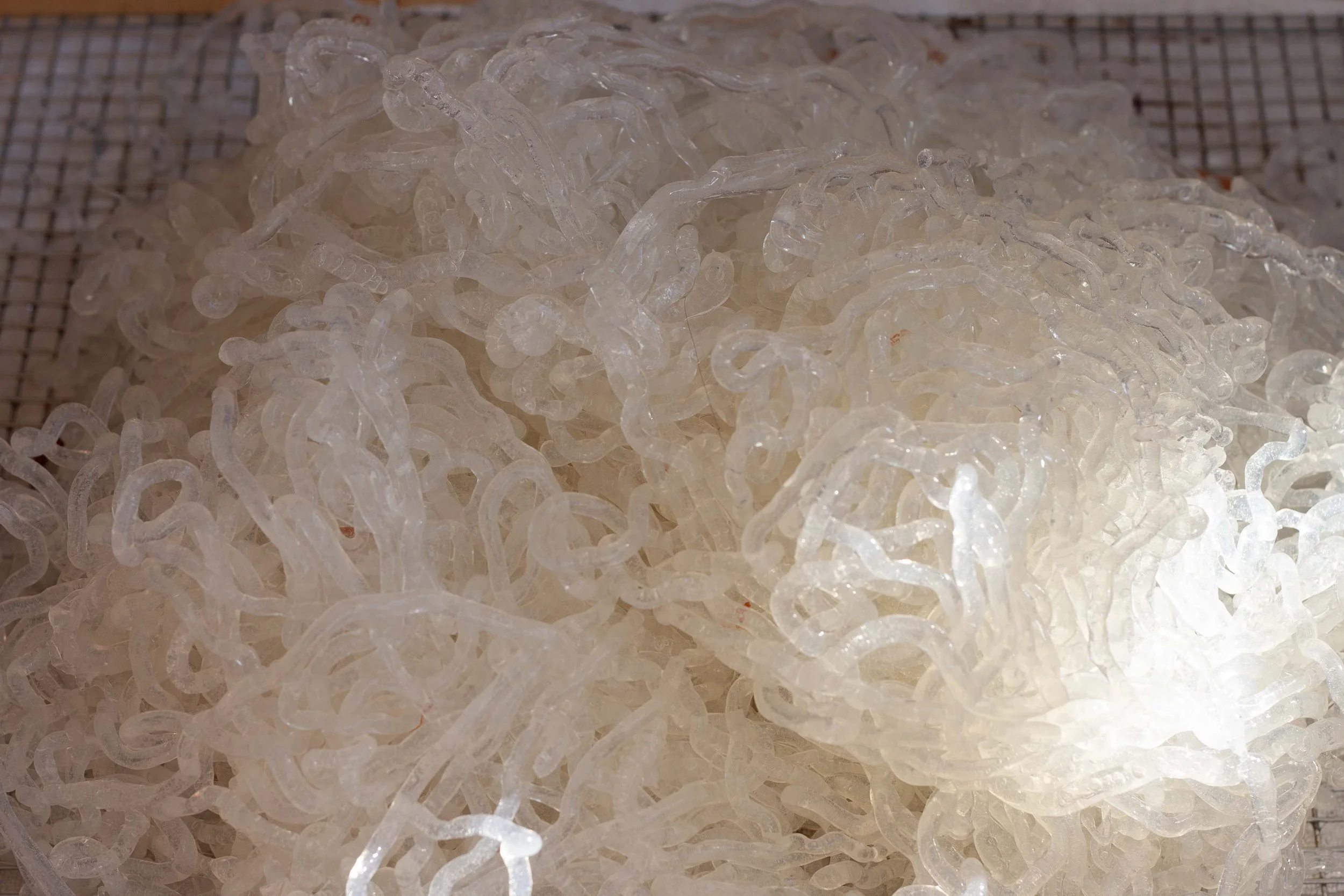
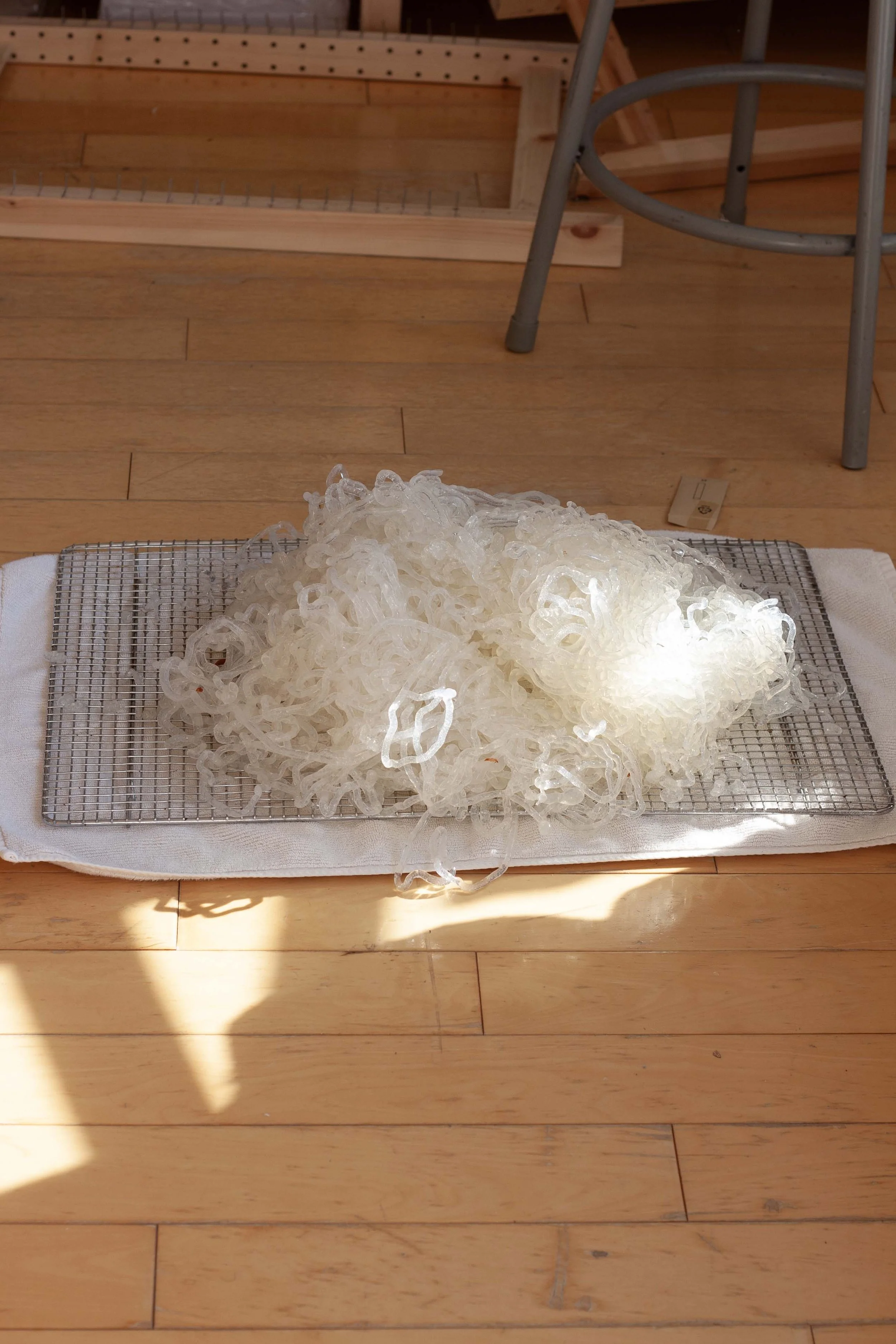
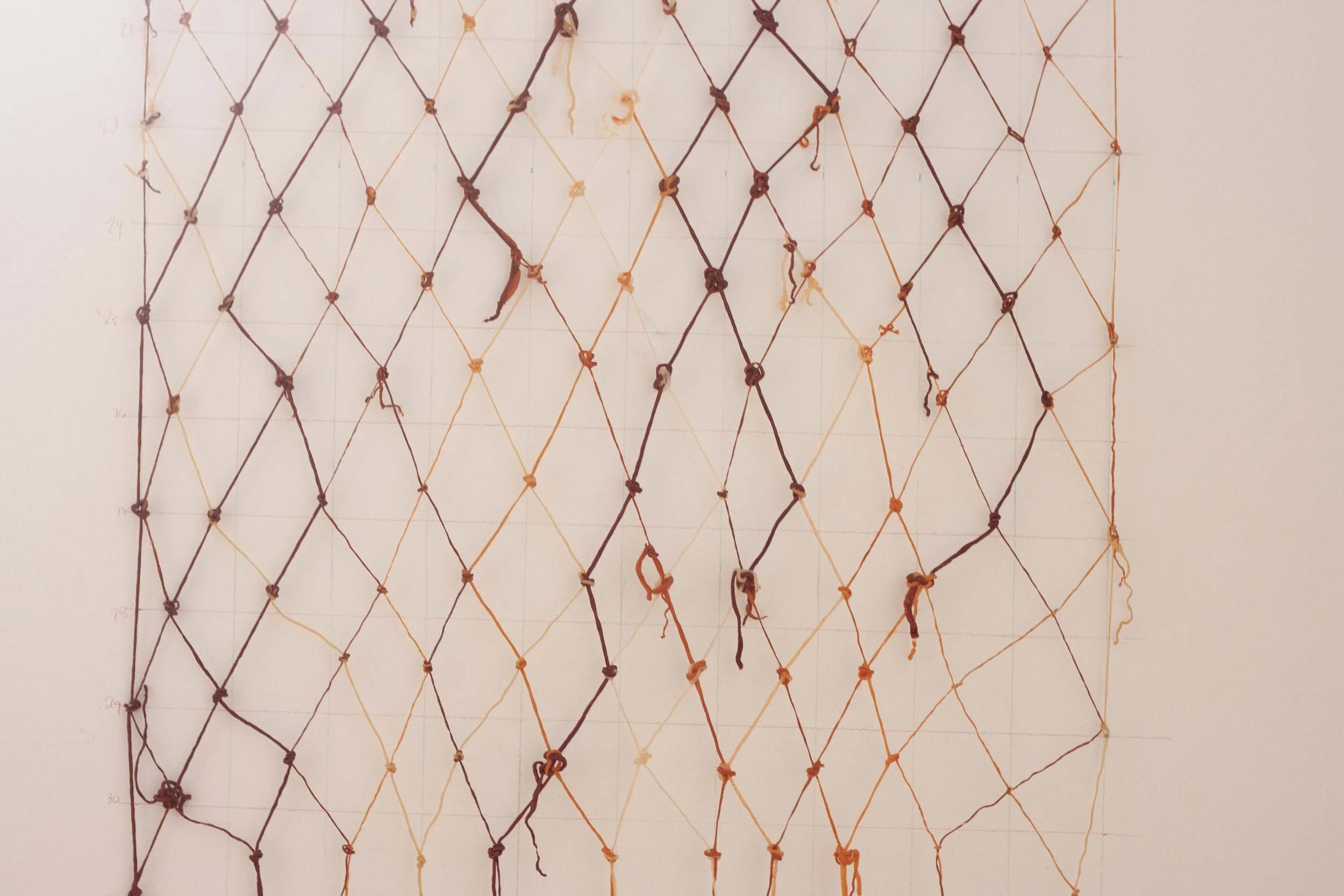
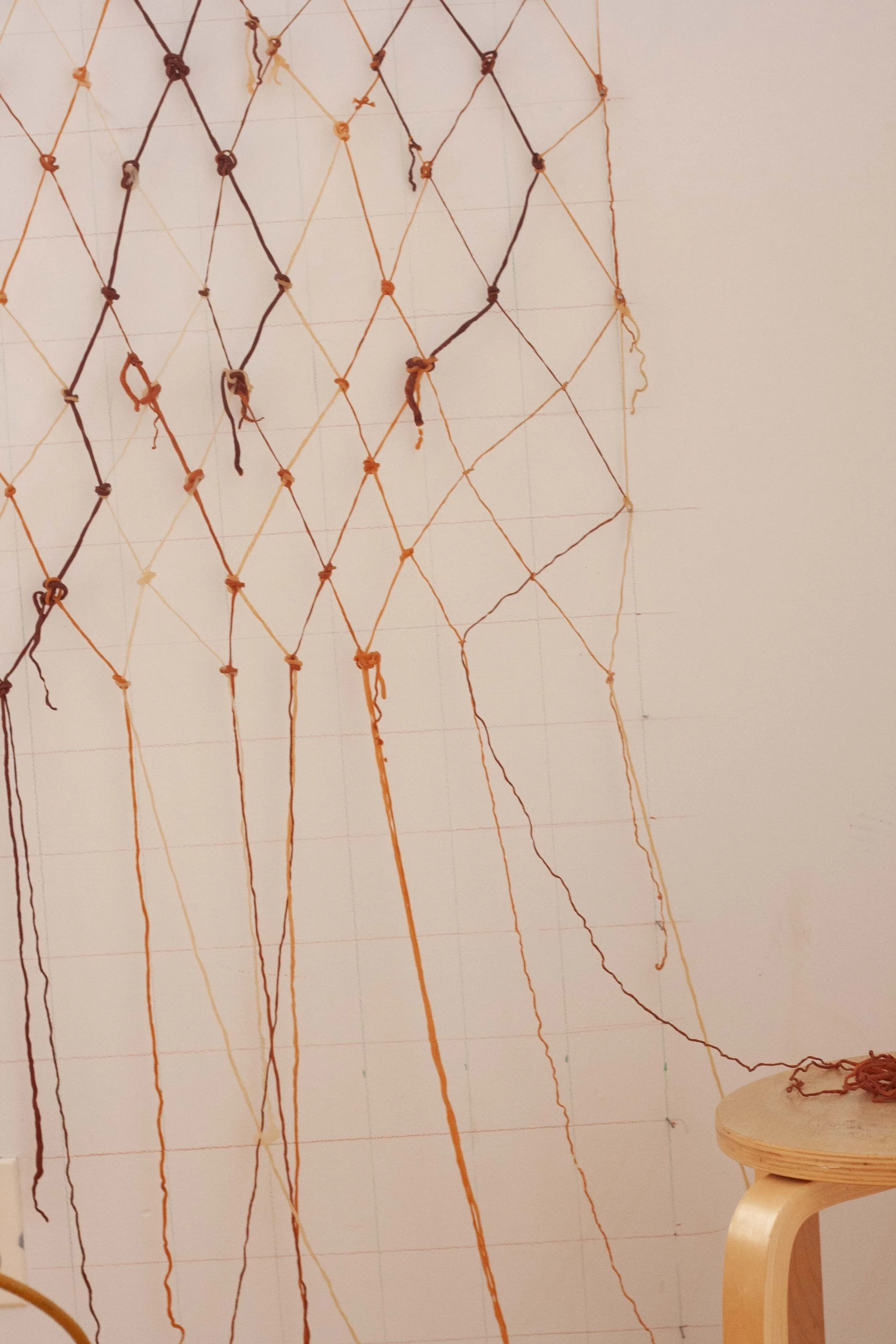
These natural materials were transformed into yarn by pulling from molecular gastronomy recipes that transform algae into plastics. A process that has been appropriated by the bio-textile world. Pombo re-appropiates these recipes as a way to manifest the Venezuelan territory that she no longer inhabits.
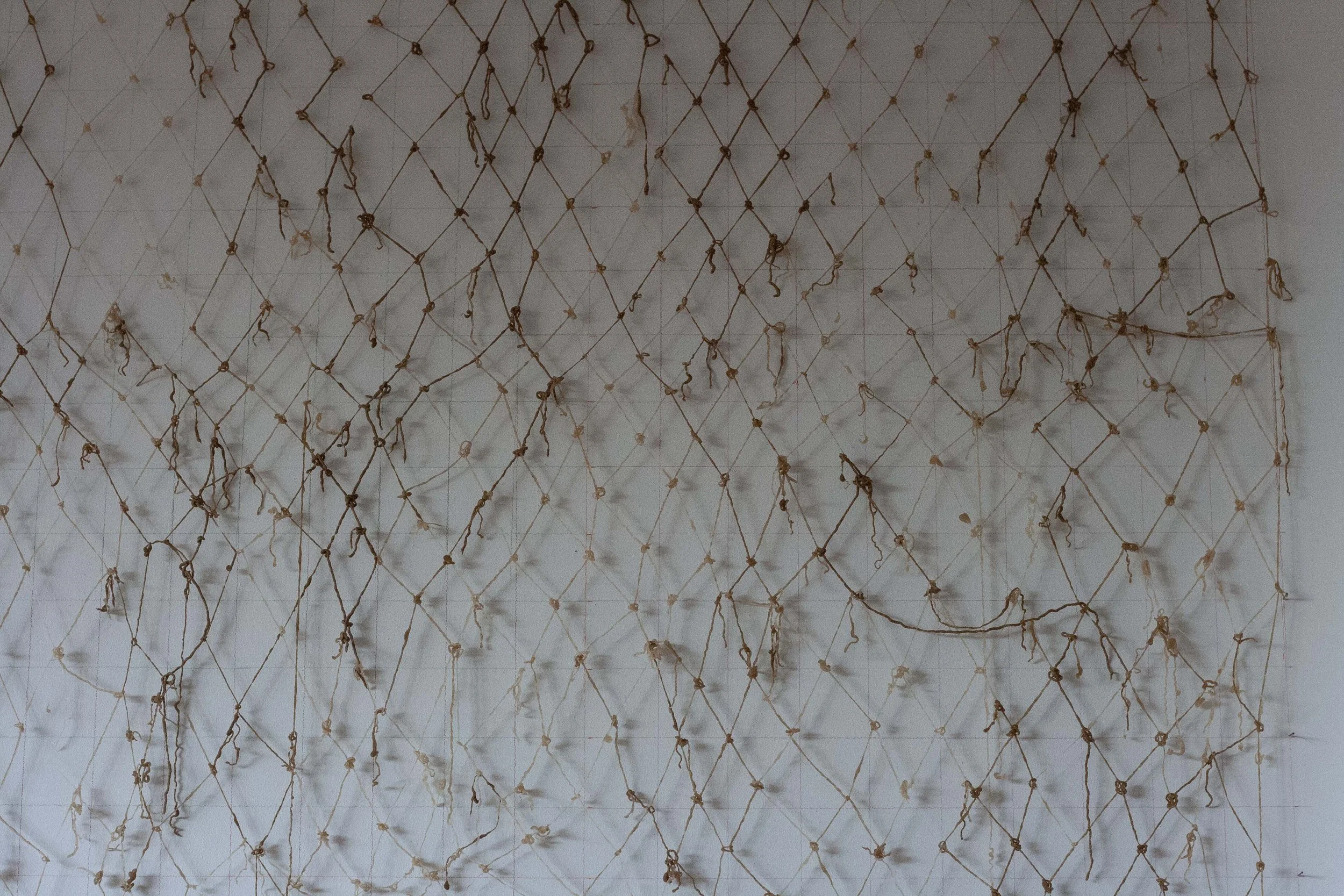
The yarn was later “woven” into 4 distinct sculptures, one for each of the samples, using a basic net pattern. Each following a different spatial logic based on characteristics of the territory that inspired it.
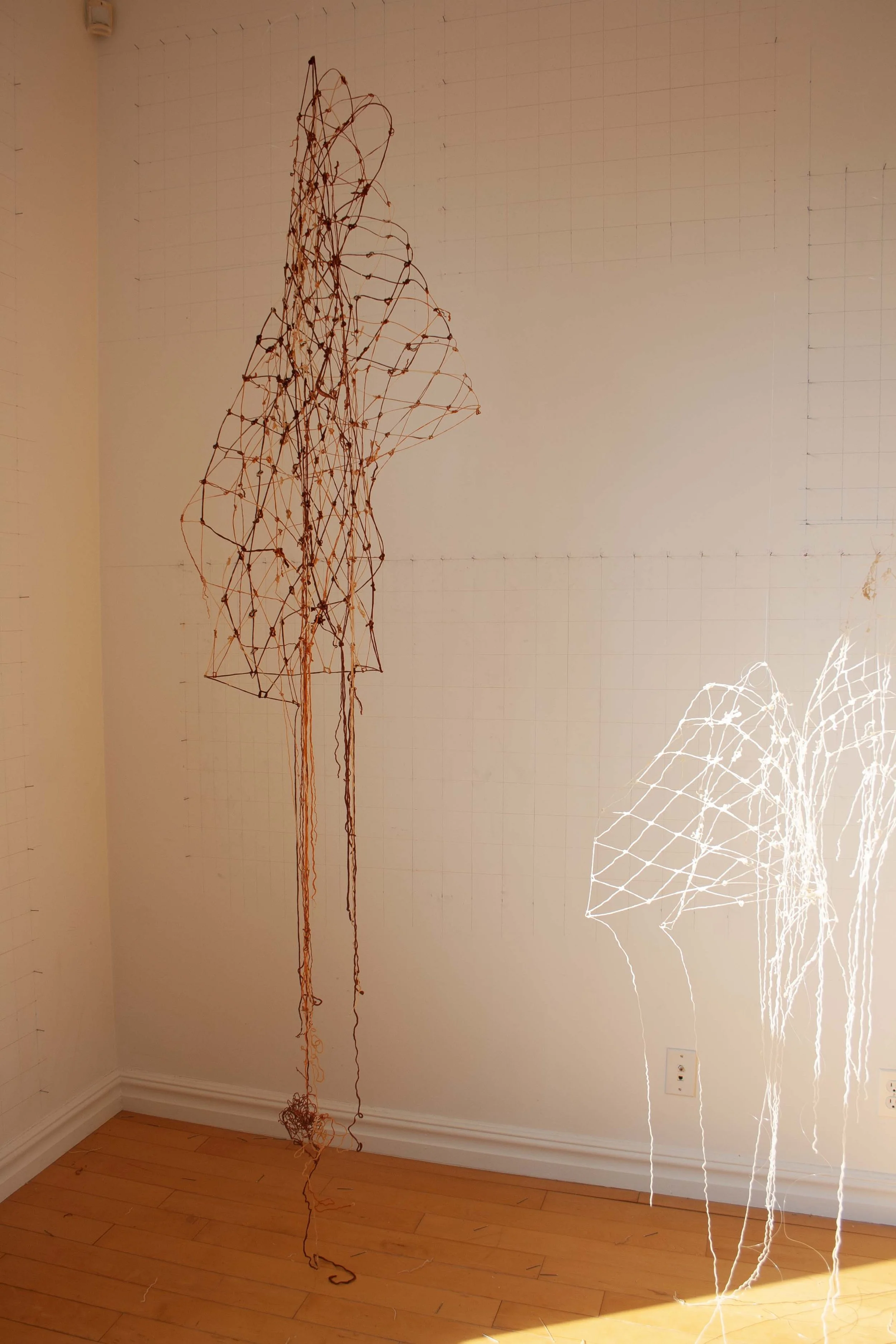
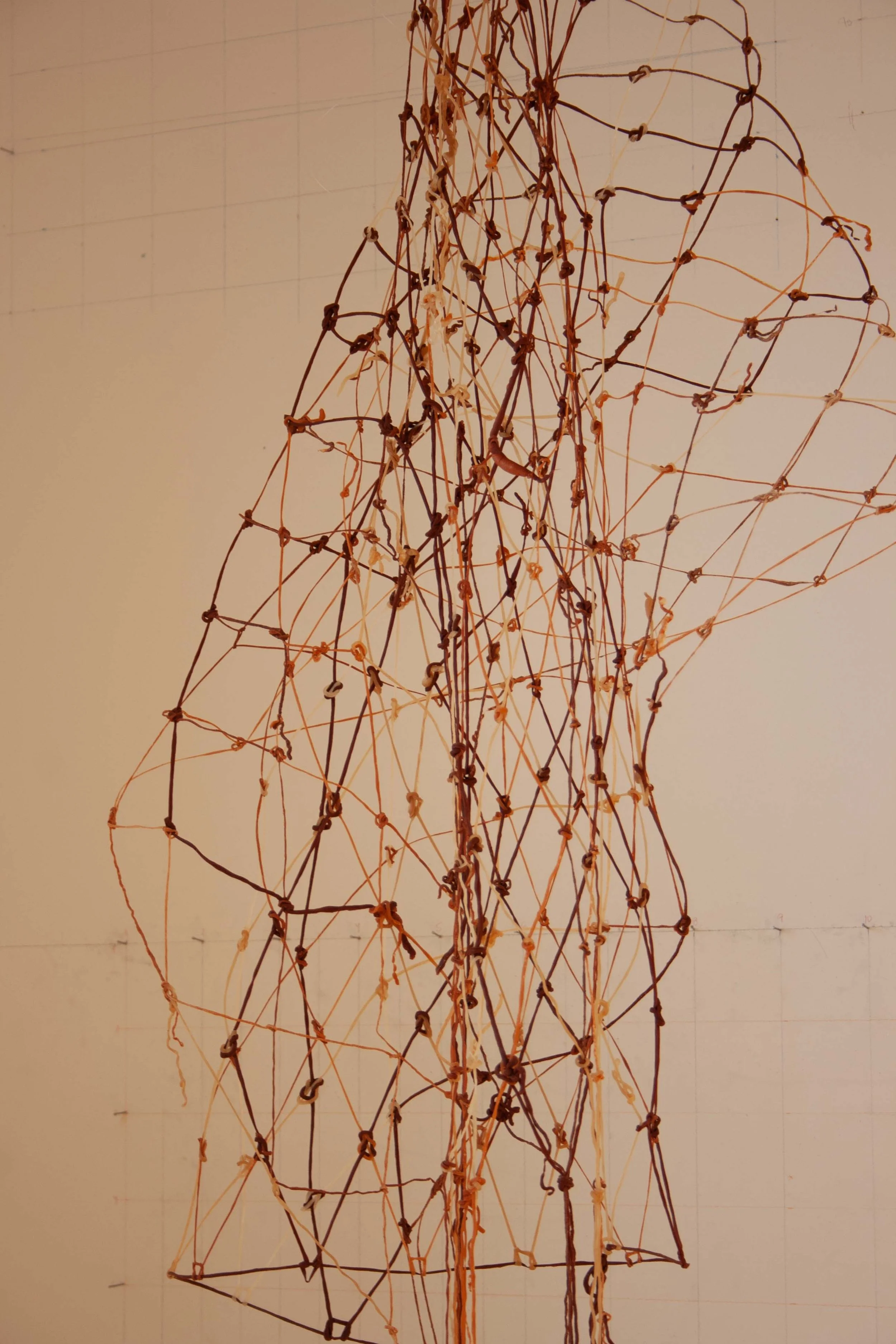
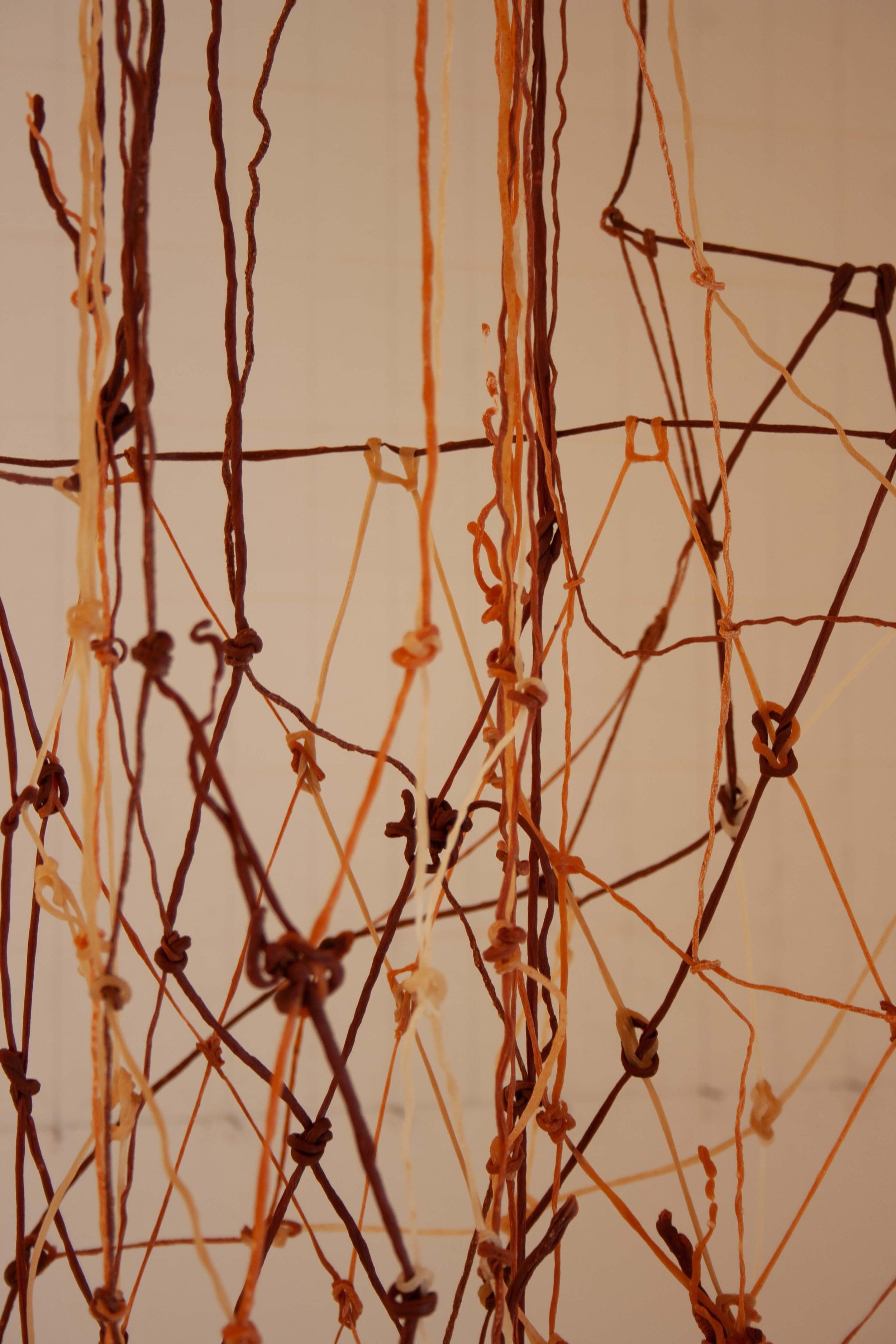
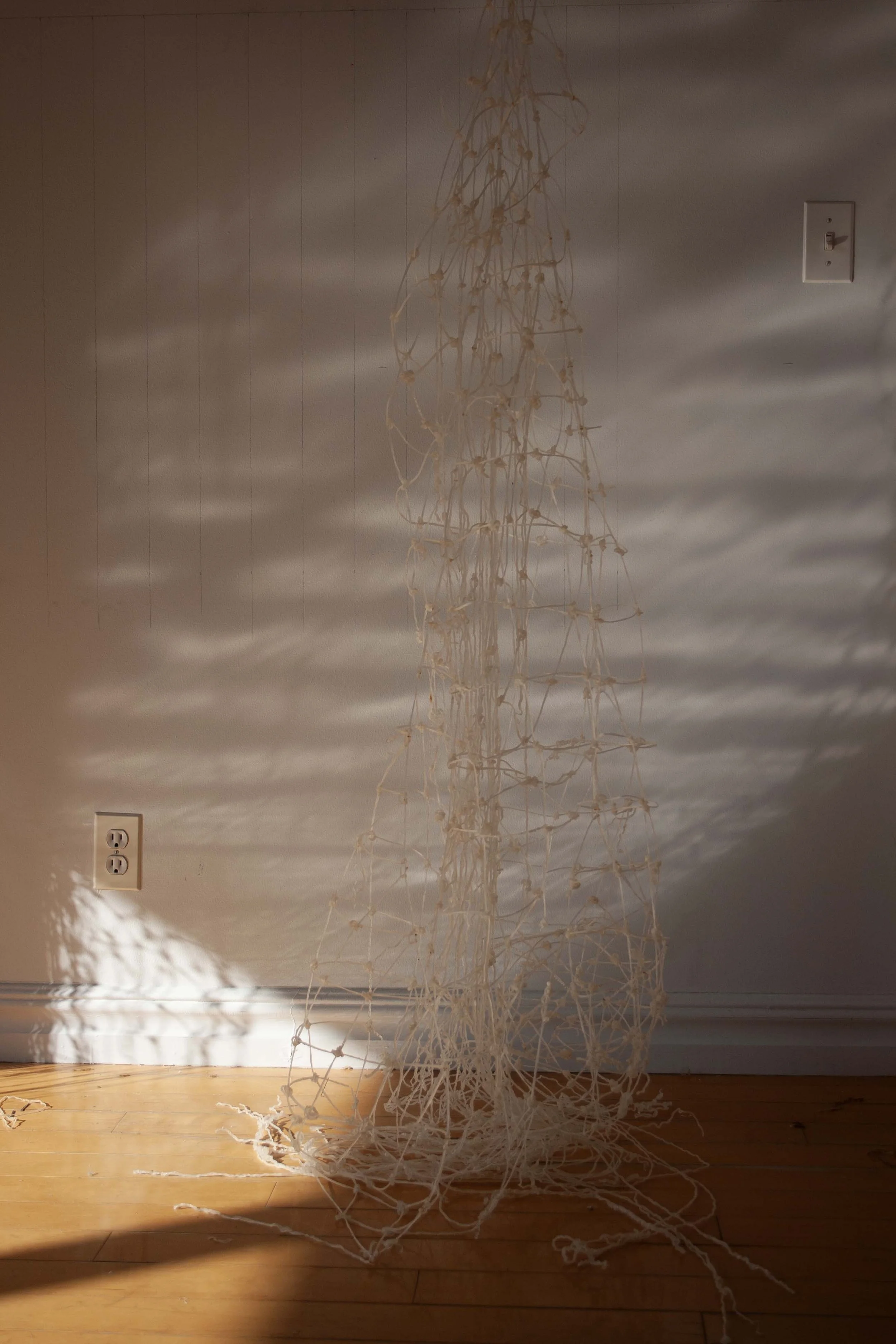
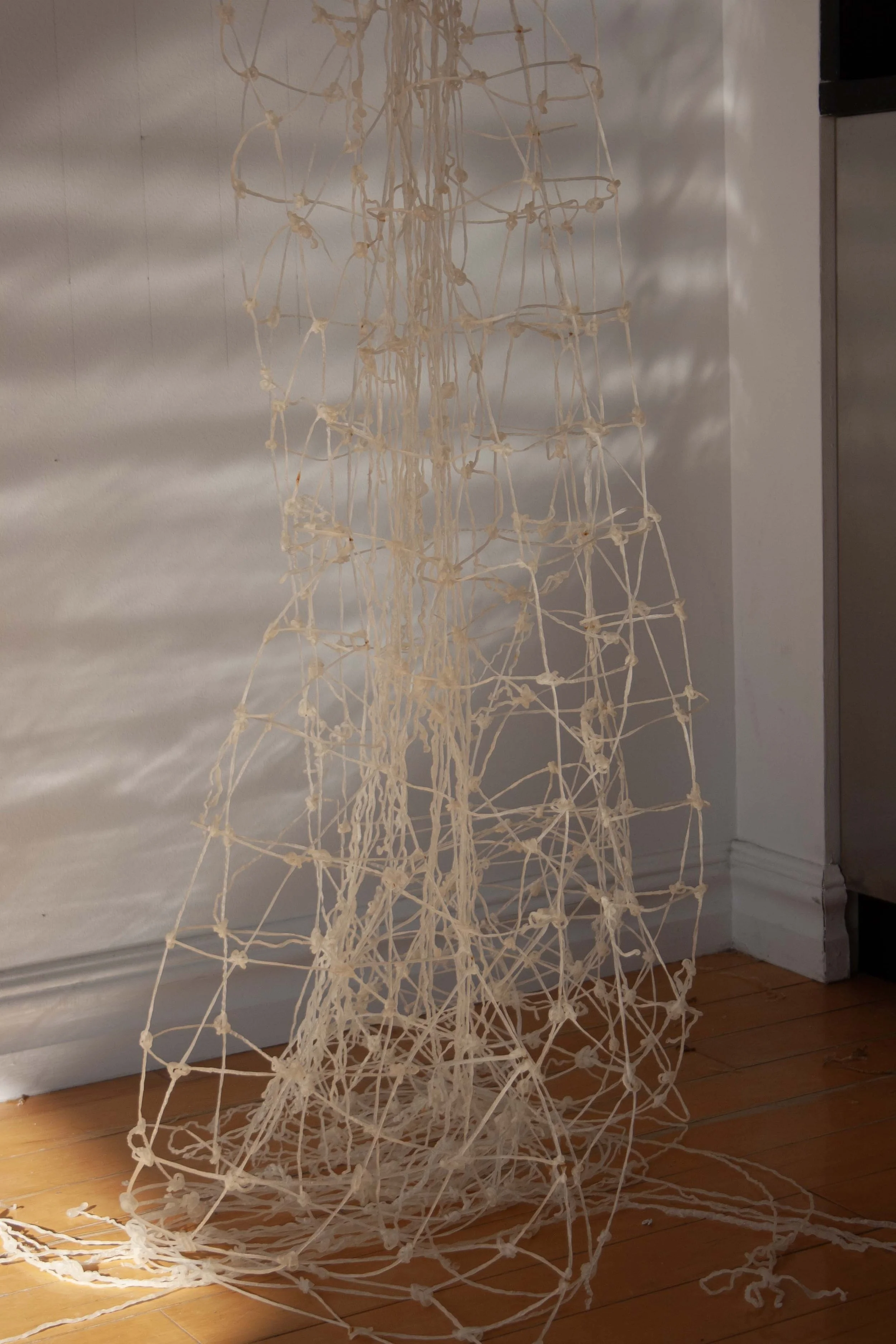
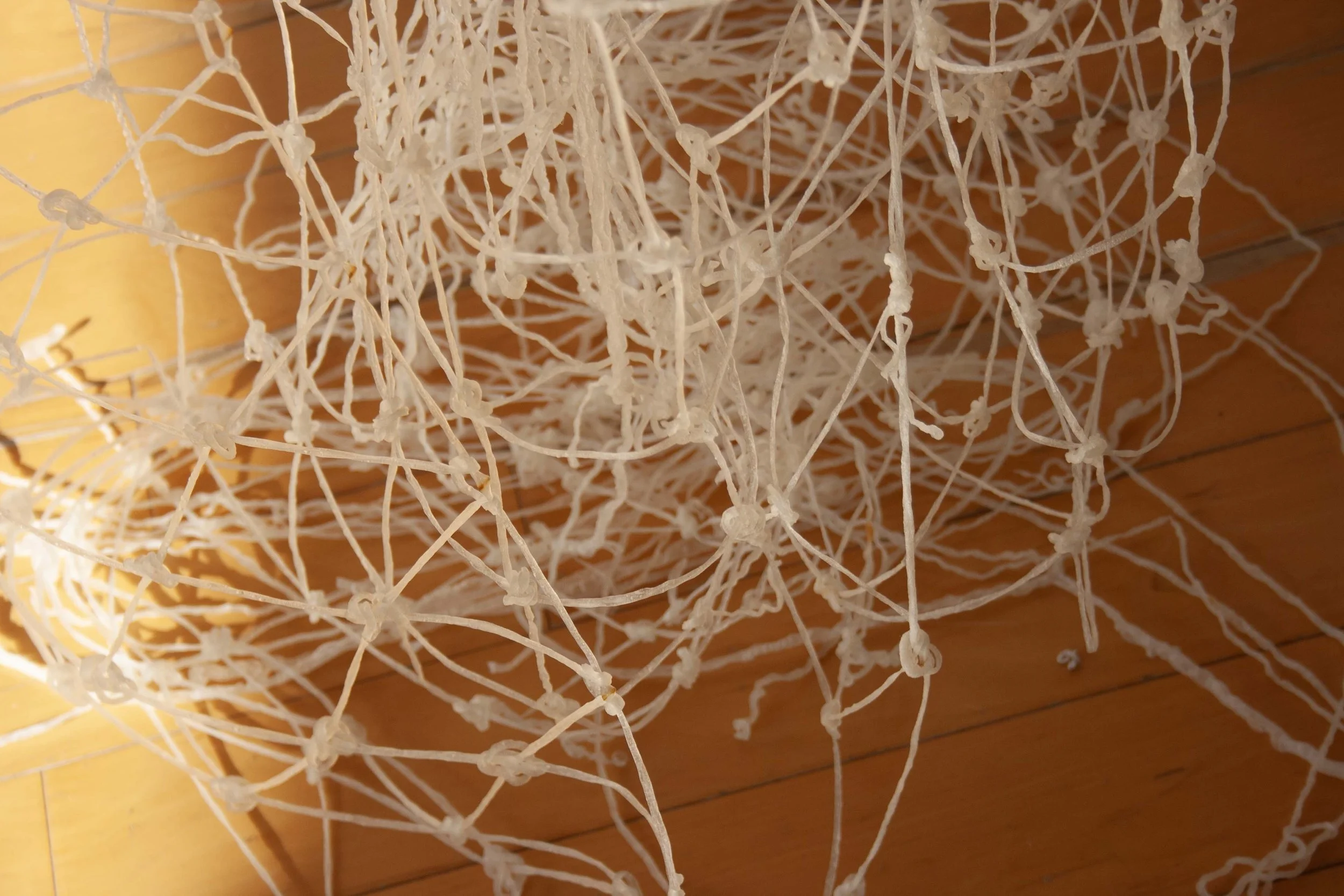
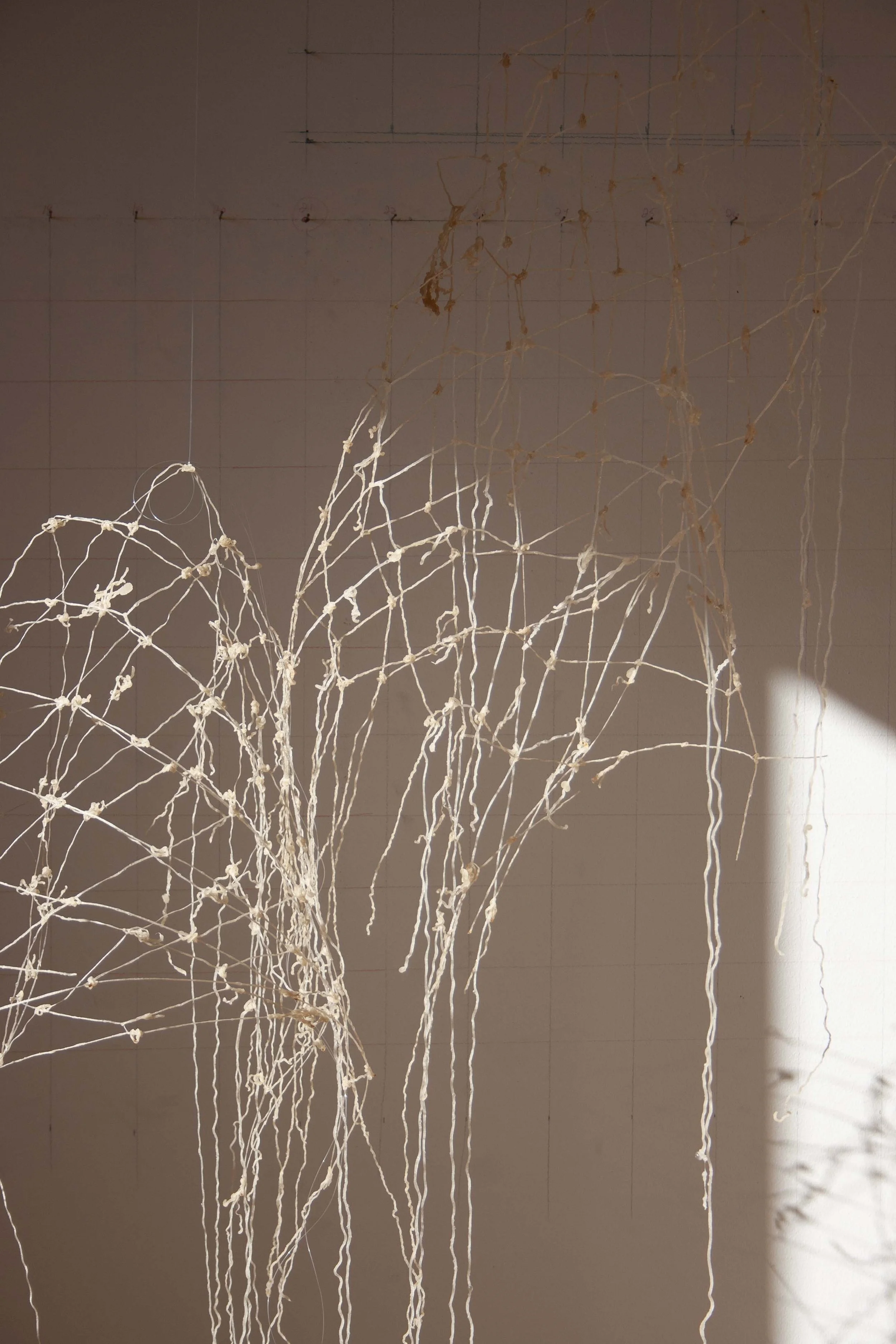
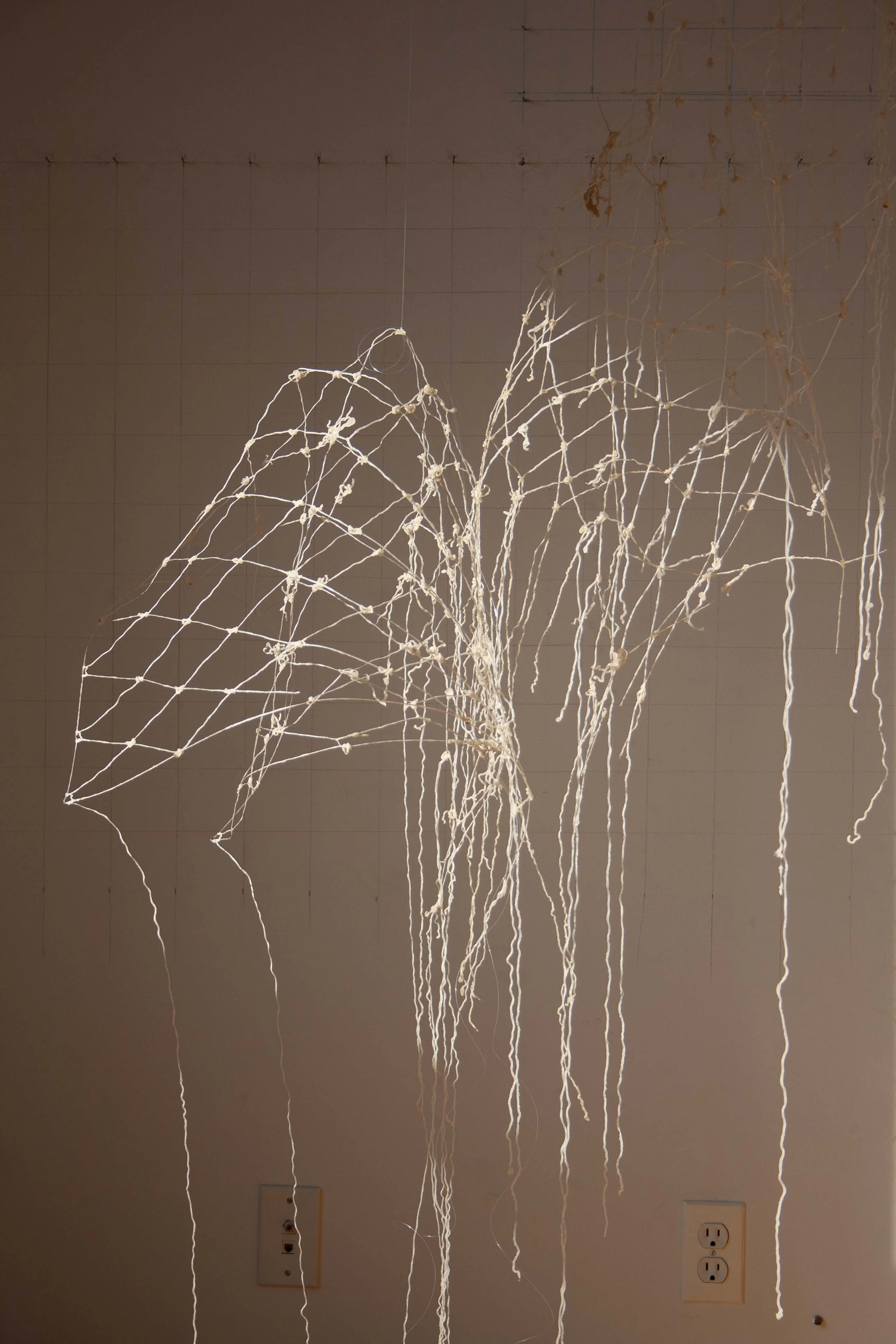
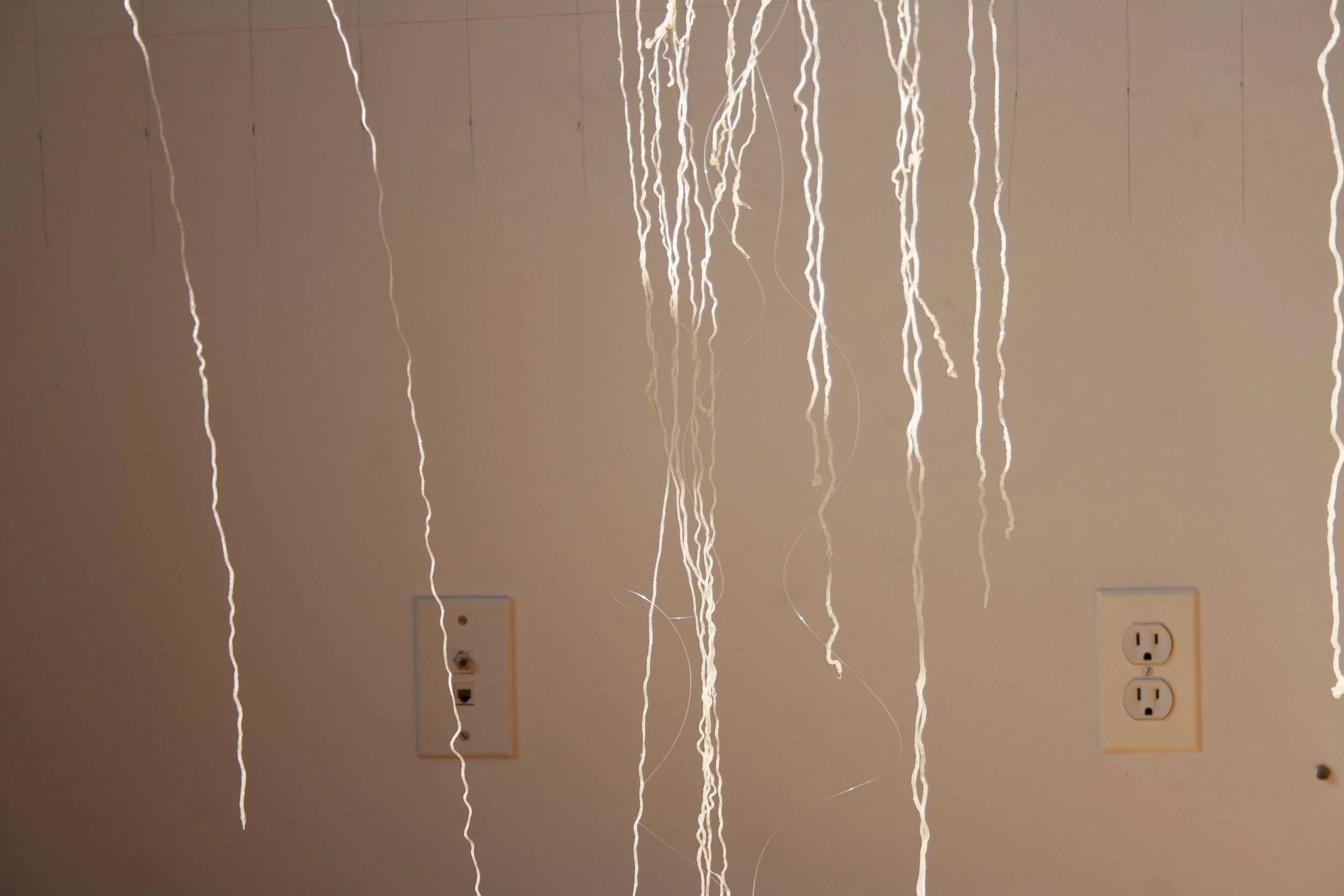
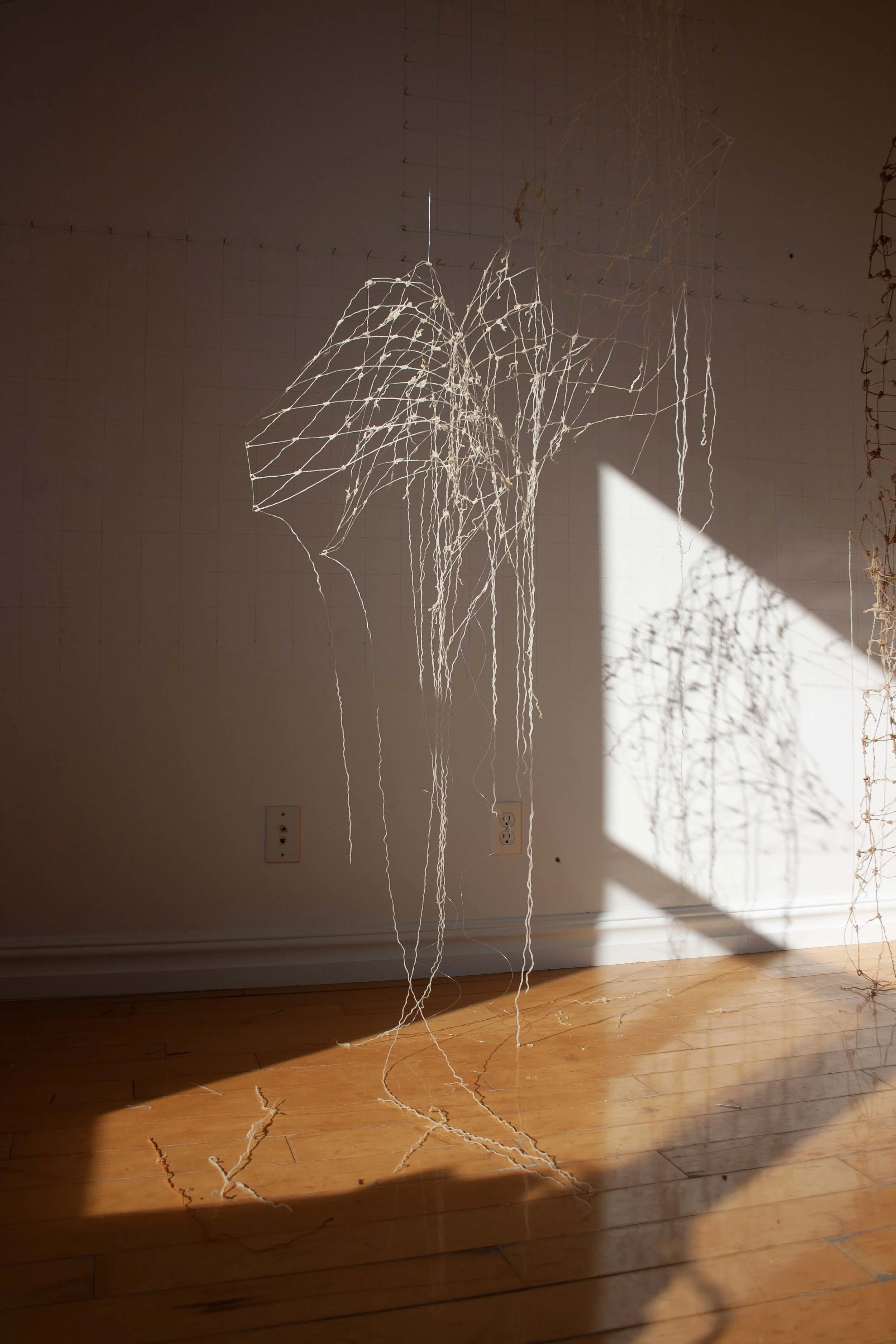
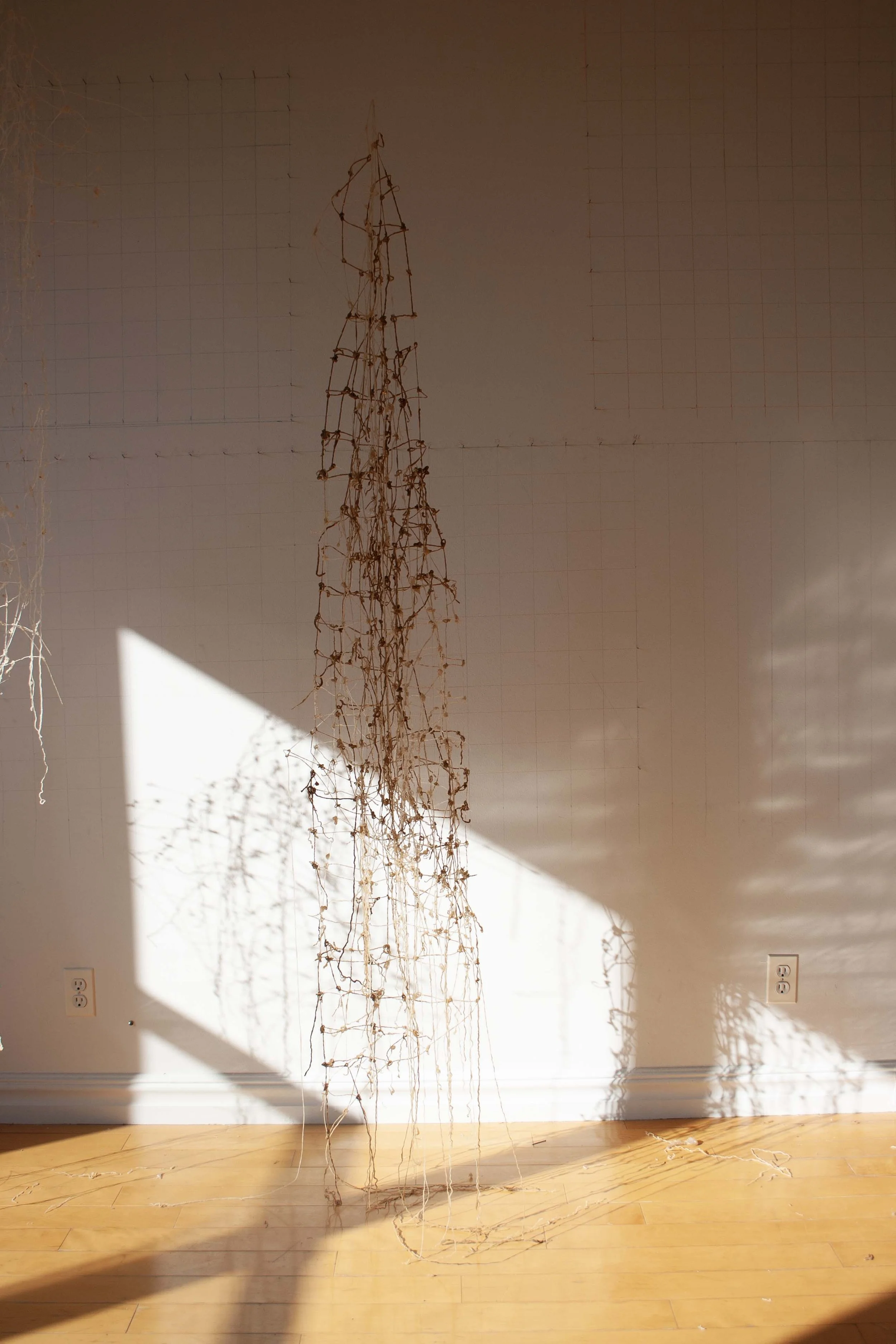
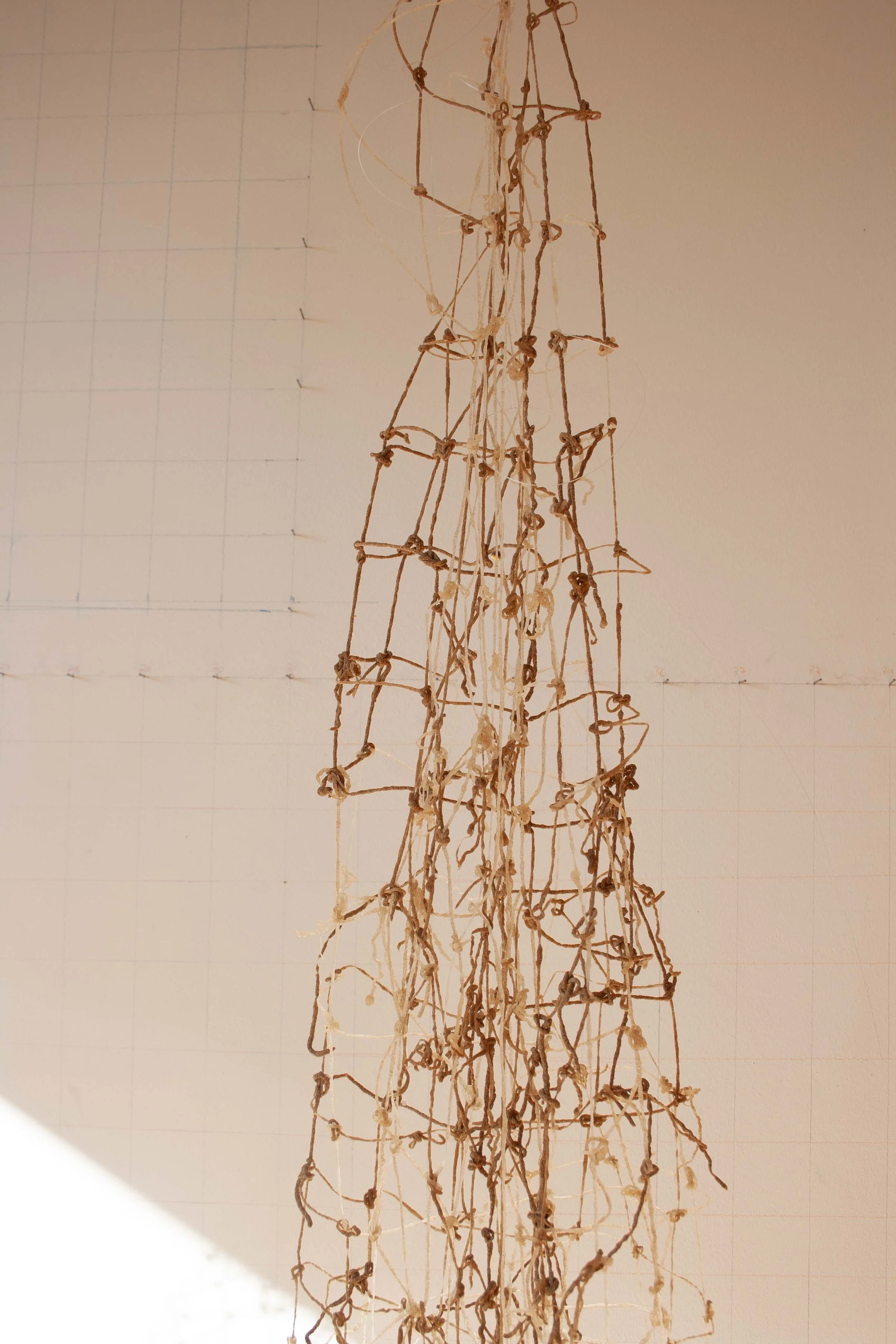
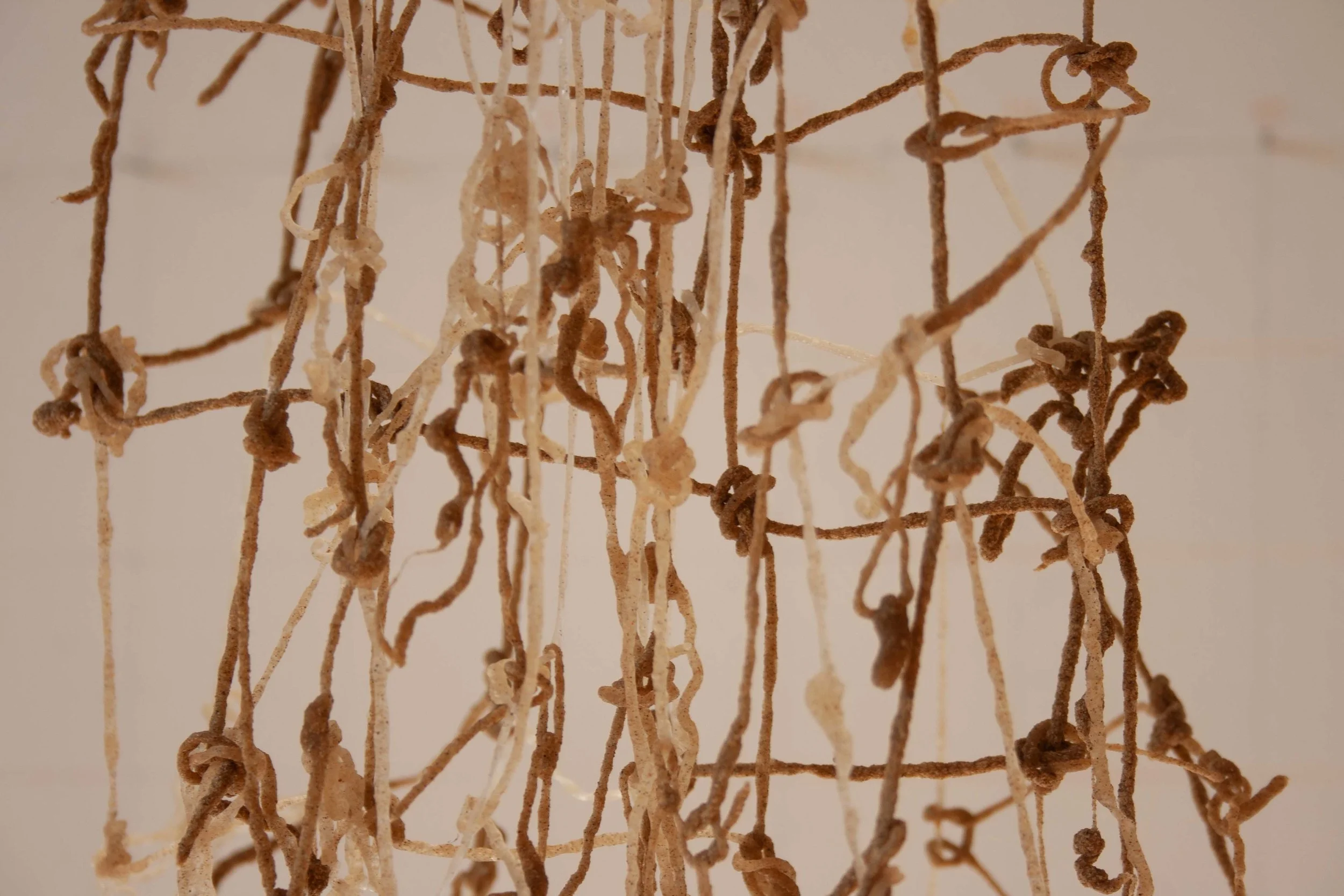
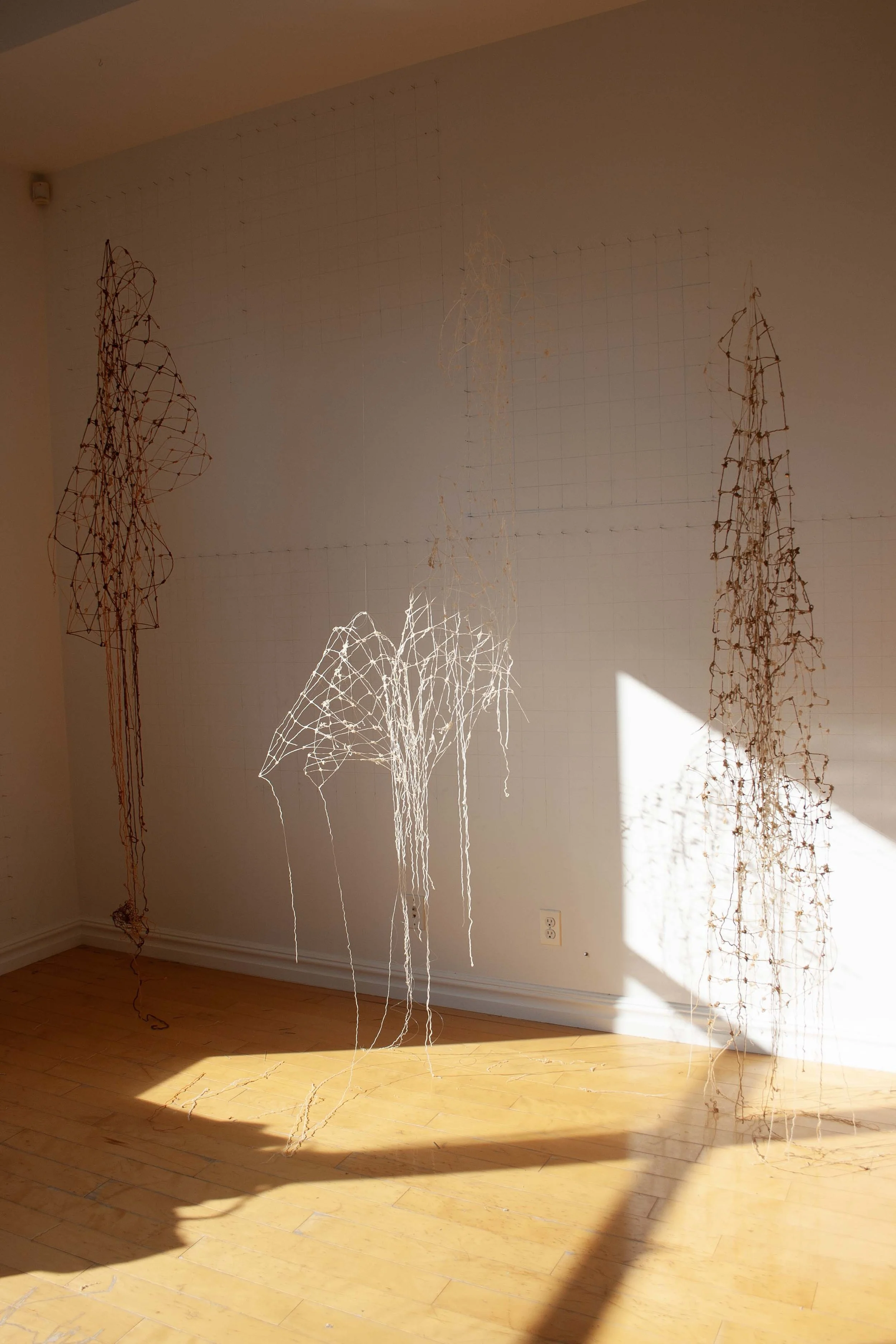
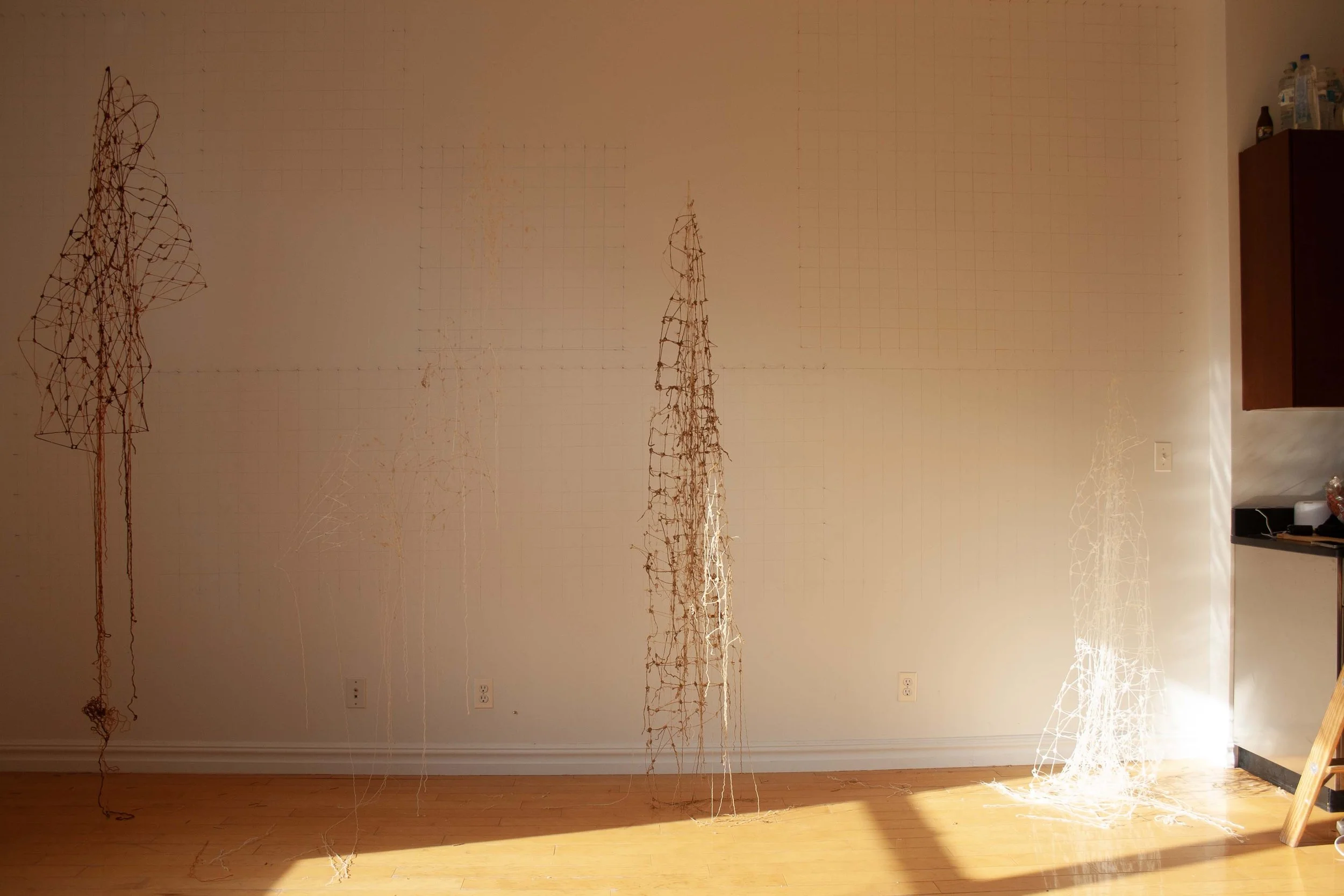
Tejiendo el Ávila con Cabré (Weaving the Ávila with Cabré) uses soil collected in January 2024 by Pombo from El Ávila, an over 9,000 ft high mountain surrounding Caracas and whose figurative representations have become ubiquitous in houses of Venezuela’s diasporic population.
Cabré being a reference to painter Manuel Cabré, whose oeuvre is mostly based on different angles of Ávila.
The piece was woven following a vertical format to replicate the verticality of the mountain.
2024
Soil from El Ávila mountain, Brown Algae Extract, Glycerine, Water
Variable dimensions. Woven dimensions: 30” x 120” x 5”
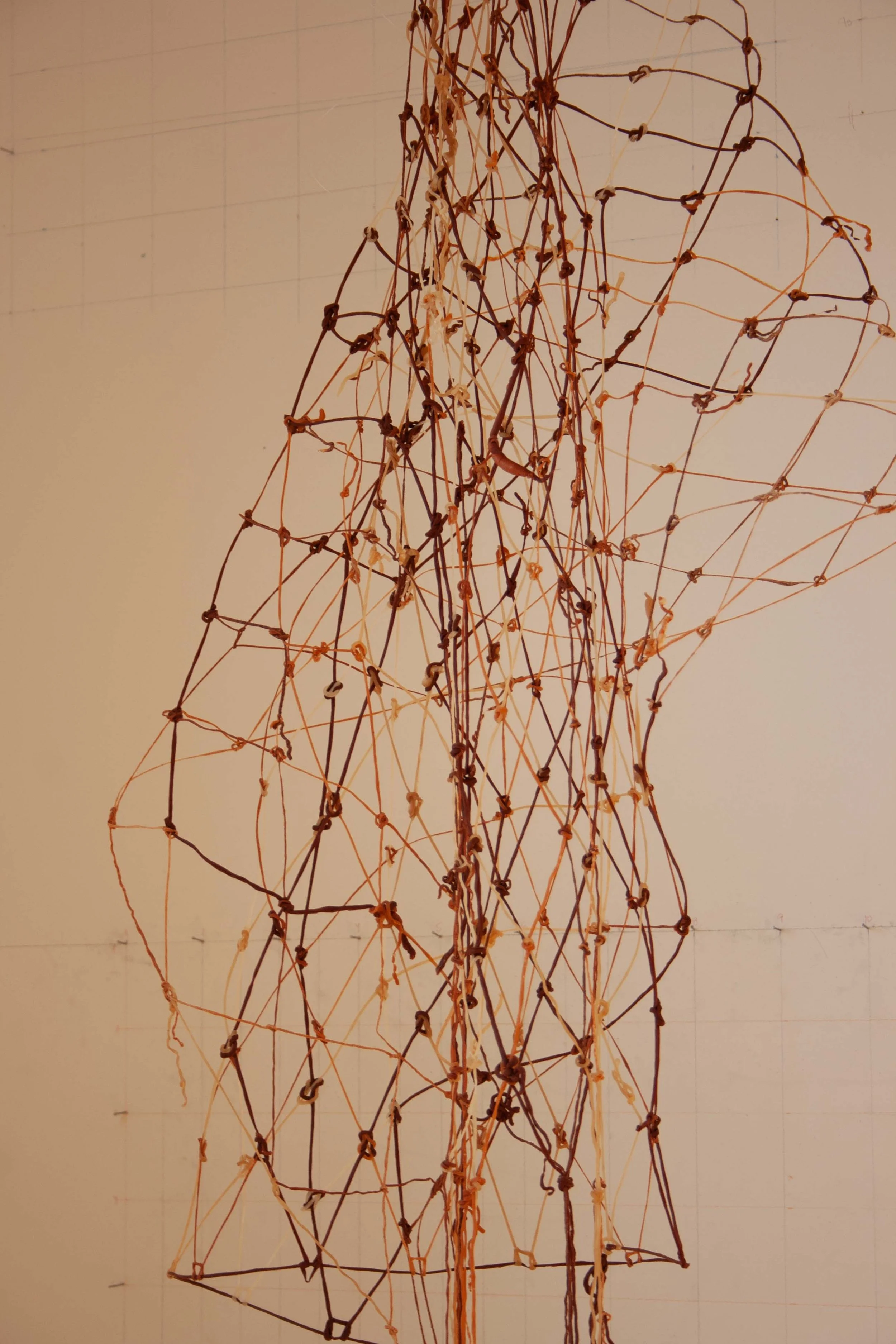
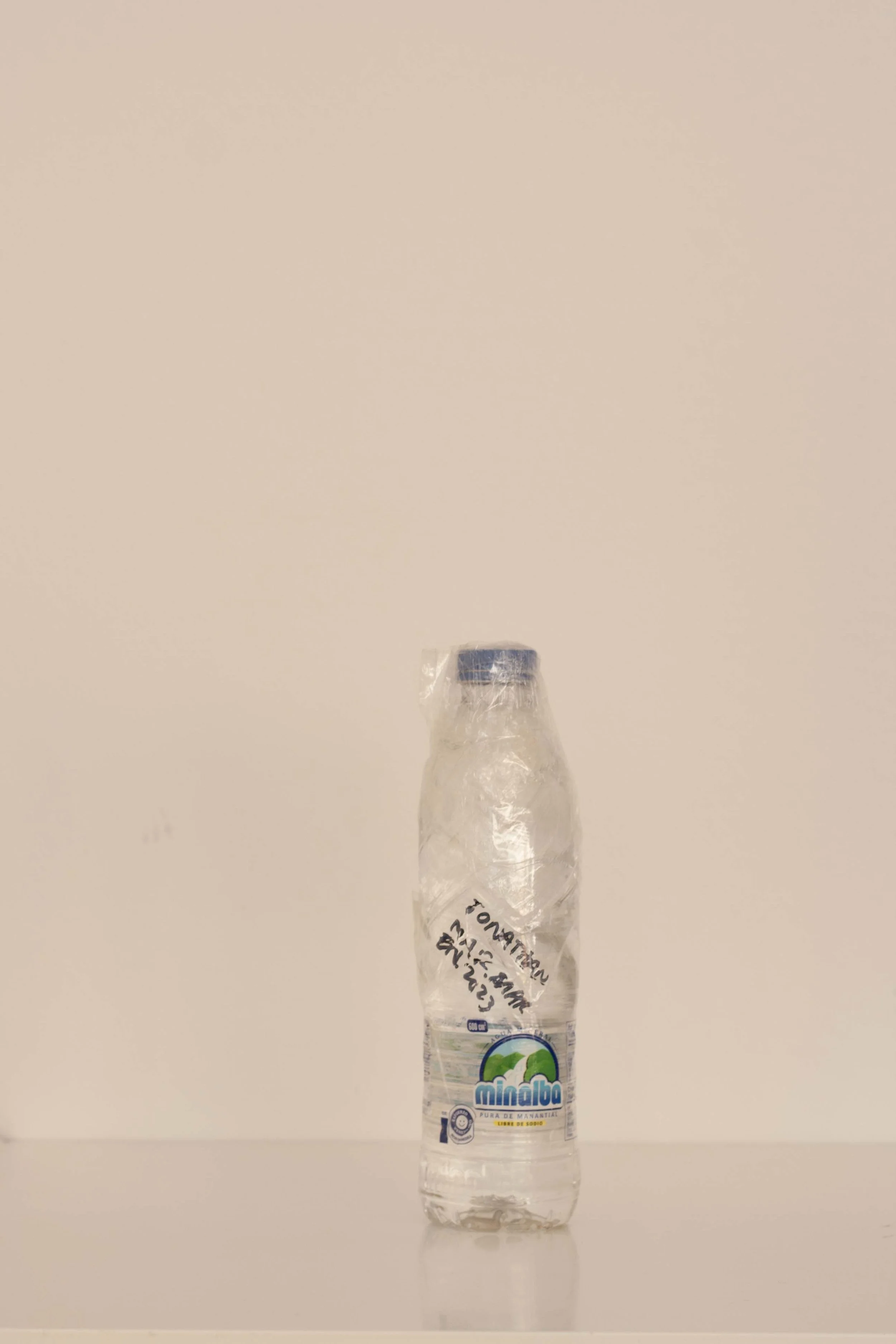
Tejiendo el Caribe con Reverón (Weaving the Caribbean with Reverón) uses water from the Caribbean, the sea that covers Venezuela’s northern borders and defines Venezuela’s most ubiquitous self-identity. The water was gifted to Pombo by her friend Jonathan Benitez in January 2023 after a visit to his native Margarita Island from London where he now lives.
Reverón being a reference to Caracas-born painter Armando Reverón who later secluded himself alongside the Caribbean and developed an important chapter of his oeuvre on representing this territory through white blotches that mimicked the intense light alongside this coast.
The piece was woven following a horizontal format, to replicate the horizontality of the ocean.
2024
Water from the Caribbean Sea, Brown Algae Extract, Glycerine
Variable dimensions. Woven dimensions: 120” x 30” x 5”
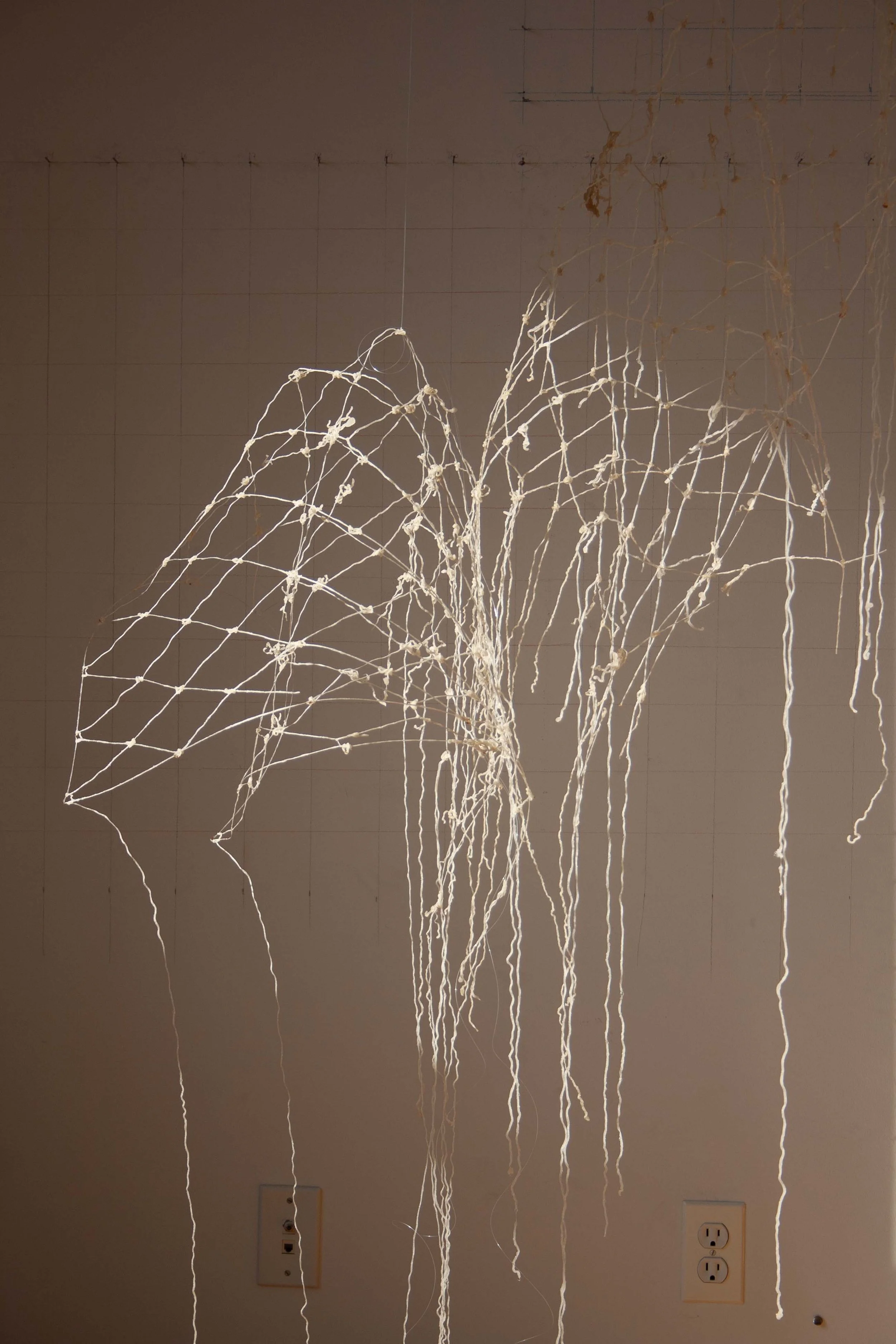
Tejiendo Las Cumaraguas con Yeni & Nan (Weaving Las Cumaraguas with Yeni & Nan) uses salt from Las Cumaraguas, a salt evaporation pond in western Venezuela.
The samples were collected in January 2024 by Pombo on a visit with her family. Yeni & Nan being a reference to the Venezuelan conceptual artists Jennifer Hackshaw and María Luisa González who created a series of works exploring Venezuela’s nature, including a salt evaporation pond in Eastern Venezuela.
The piece was woven in three square pieces, to replicate the artificial and fragmented nature of the salt evaporation pond.
2024
Salt from Las Cumaraguas, Brown Algae Extract, Glycerine, Water
Variable dimensions. Woven dimensions: 20” x 20” x 120”
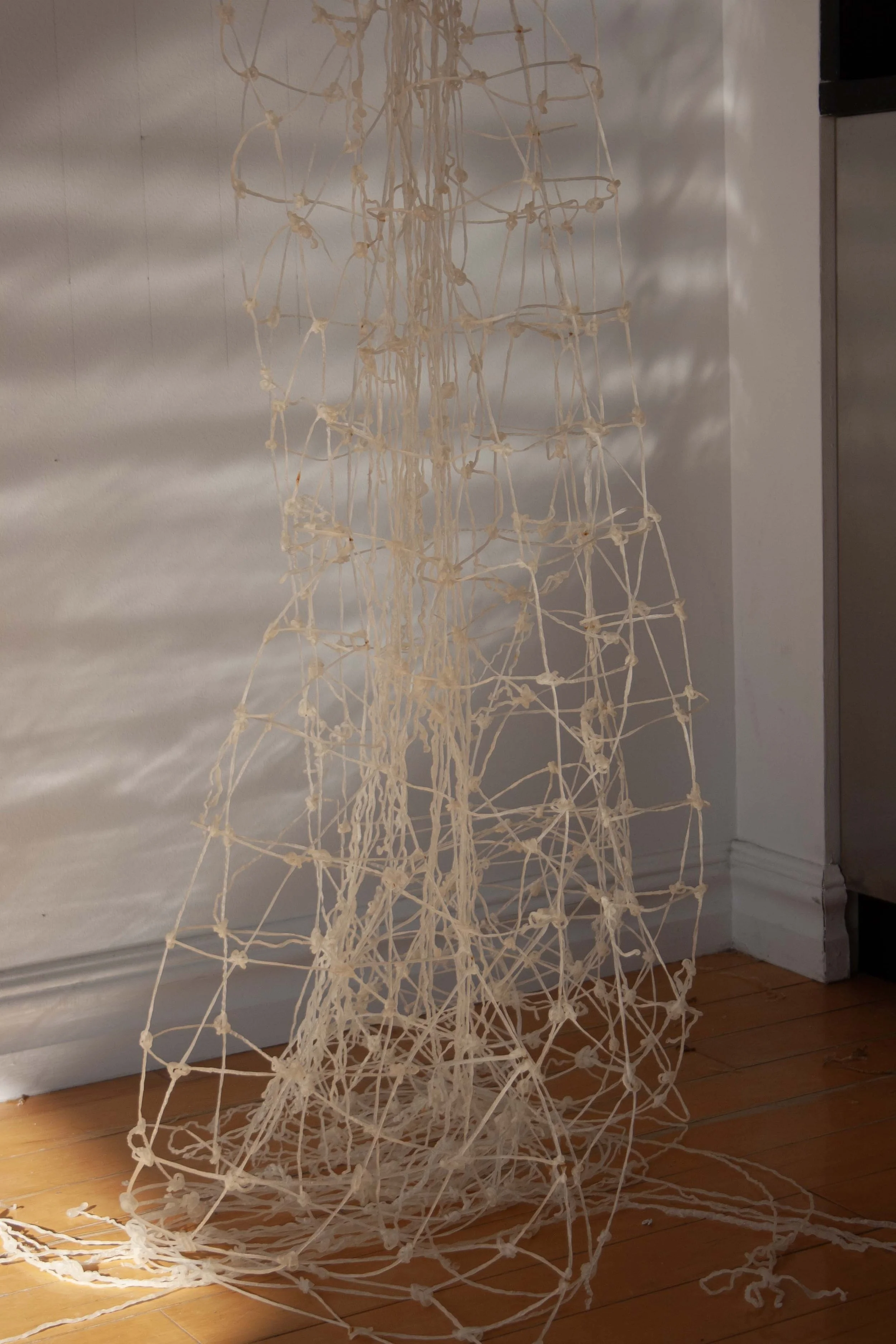
Tejiendo Los Médanos con Nela (Weaving the Médanos with Nela) uses sand from Los Médanos de Coro, a desert in western Venezuela.
The samples were collected in January 2024 by Pombo on a visit with her family. Nela being a reference to Nela Ochoa, a Venezuelan artist who explored this territory through various short films developed in the 1980s.
The piece was woven in a square format to replicate the uneven nature of this type of formation.
2024
Sand from Los Médanos de Coro, Brown Algae Extract, Glycerine, Water
Variable dimensions. Woven dimensions: 30” x 30” x 5”